
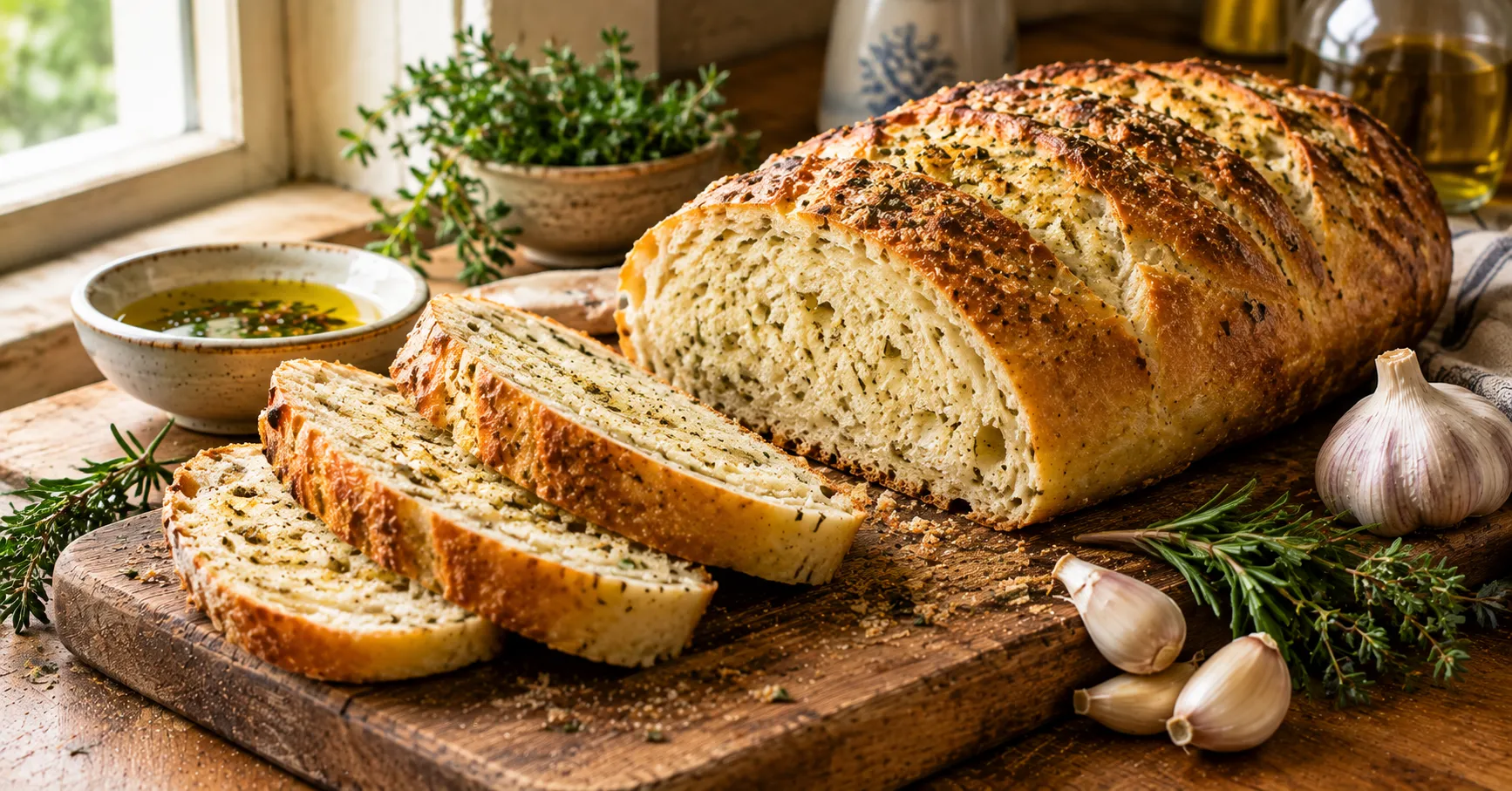
There’s a reason so many Wegmans shoppers find themselves grabbing a loaf of garlic Tuscan bread every time they walk past the bakery section. It’s soft, garlicky, subtly herby, and just about impossible to resist warm out of the oven with a bit of butter. A Wegmans garlic Tuscan bread recipe made at home captures that same soft crumb and garlic-forward flavor, without needing a trip to the store.
This guide walks through a full homemade version of this bakery favorite, a bread machine adaptation for hands-off baking, and a look at the surprisingly interesting history behind traditional Tuscan bread, including why some versions are made completely without salt. We’ll also cover common questions and troubleshooting tips. By the end, you’ll have a reliable loaf that rivals the bakery version, made entirely in your own kitchen.
What Makes Garlic Tuscan Bread So Popular
Garlic Tuscan bread sits somewhere between a classic Italian loaf and garlic bread, with a soft, slightly chewy crumb, a mild garlic flavor worked throughout the dough rather than just brushed on top, and a light dusting of Italian herbs. Unlike garlic bread that’s sliced and topped after baking, this style incorporates minced or roasted garlic and herbs directly into the dough itself, along with a touch of olive oil, giving the bread a more subtle, well-rounded garlic flavor rather than an overwhelming punch.
This approach makes it incredibly versatile. It works as a dinner side, a sandwich bread, or simply toasted with butter, all without the bread ever feeling like a one-note “garlic bread” experience.
Wegmans Garlic Tuscan Bread Recipe
Here’s a full homemade version inspired by this bakery favorite, made from scratch with simple pantry ingredients.
Ingredients
- 1 cup warm water (about 110°F)
- 2 1/4 teaspoons active dry yeast
- 1 tablespoon granulated sugar
- 2 tablespoons olive oil, plus extra for brushing
- 3 cups bread flour, plus extra as needed
- 1 1/2 teaspoons salt
- 3 garlic cloves, minced (or 1 tablespoon roasted garlic paste)
- 1 teaspoon dried Italian herb blend (oregano, basil, thyme)
- 1 tablespoon melted butter, for brushing after baking
Instructions
- In a large bowl, combine the warm water, yeast, and sugar. Let sit for 5 to 10 minutes, until foamy, which confirms the yeast is active.
- Stir in the olive oil, minced garlic, and dried herbs.
- Add the flour and salt, mixing until a shaggy dough forms. Turn the dough out onto a floured surface and knead for 8 to 10 minutes, until smooth and elastic, adding a little extra flour if the dough is too sticky to handle.
- Place the dough in a lightly oiled bowl, cover, and let rise in a warm spot for about 1 hour, until doubled in size.
- Punch down the dough and shape it into a loaf or a rounder, rustic shape, then place it on a baking sheet lined with parchment paper. Cover loosely and let rise again for 30 to 40 minutes.
- Preheat the oven to 375°F. Brush the top of the loaf with a little olive oil, and if you like, score the top with a few shallow slashes.
- Bake for 25 to 30 minutes, until golden brown and the loaf sounds hollow when tapped on the bottom.
- Brush the warm loaf with melted butter as soon as it comes out of the oven for extra flavor and a soft, glossy crust.
Wegmans Garlic Tuscan Bread Recipe Easy Version
If you want to skip a chunk of the hands-on time, this easy version uses a shortcut with store-bought pizza dough as the base.
- Let 1 pound of store-bought pizza dough come to room temperature.
- Knead in 2 minced garlic cloves and a teaspoon of dried Italian herbs directly into the dough by hand.
- Shape into a loaf, place on a lined baking sheet, and let rest for 20 minutes.
- Brush with olive oil and bake at 400°F for 20 to 25 minutes, until golden brown.
This shortcut version won’t develop quite as much flavor depth as a fully from-scratch dough, but it’s a great option when you’re short on time and still want that garlicky, herby result.
Garlic Tuscan Bread Machine Recipe
For a truly hands-off approach, a garlic Tuscan bread machine recipe lets your machine handle the mixing, kneading, and rising for you.
- Add the ingredients to your bread machine pan in the order recommended by your machine’s manual, typically liquids first, followed by flour, sugar, salt, garlic, herbs, and yeast last, keeping the yeast away from direct contact with the salt or liquid.
- Use the basic or white bread cycle with a light to medium crust setting.
- Once the cycle finishes, remove the loaf promptly and let it cool on a wire rack before slicing, since this helps the crumb set properly.
This method is especially convenient if you want fresh bread with minimal effort, since the machine does nearly all of the work.
Tuscan Herb Bread Recipe: Adjusting the Flavor Profile
For a Tuscan herb bread recipe with a slightly different balance, you can dial back the garlic and let the herbs take more of a lead role. Increase the dried herb blend to about 1 1/2 to 2 teaspoons, and consider adding a teaspoon of finely chopped fresh rosemary for extra depth. This variation leans more toward an herbed Italian loaf than a distinctly garlicky one, which some people prefer for a milder, more all-purpose bread.
Tuscan Sandwich Bread Recipe: A Sturdier Variation
If you want to use this bread for sandwiches, a Tuscan sandwich bread recipe benefits from a slightly denser crumb that holds up better to fillings. Reduce the water by about 2 tablespoons and knead for an extra minute or two to develop a bit more structure. Baking the dough in a standard loaf pan rather than free-form on a baking sheet also helps create the taller, more uniform slices that work best for sandwiches.
The History Behind Traditional Tuscan Bread
One of the more interesting facts about Tuscan bread is that the traditional version, known as pane toscano, is famously made without any salt at all. This tradition dates back centuries, with several theories explaining why. Some historical accounts point to a salt tax imposed by rival city-states that made salt prohibitively expensive in the Tuscany region, prompting bakers to simply leave it out entirely. Others suggest the unsalted bread was designed to pair with the region’s naturally salty, flavorful cured meats and rich sauces, letting the bread act as a neutral base rather than competing with those flavors.
This is where the difference between a Tuscan bread with salt and a Tuscan bread no-salt recipe really comes into play. Modern garlic Tuscan bread, like the Wegmans-style version above, includes salt for a more balanced, familiar flavor that suits a wider range of American tastes and pairings. If you want to try the more historically accurate version, simply omit the salt from the base dough recipe, though keep in mind the flavor will be noticeably plainer and is traditionally meant to be eaten alongside heavily seasoned foods rather than on its own.
Whole Garlic Clove Bread Recipe: A Bolder Twist
For garlic lovers who want an even more pronounced flavor, a whole garlic clove bread recipe incorporates roasted whole garlic cloves directly into the dough rather than relying solely on minced garlic. To make this variation, roast a whole head of garlic wrapped in foil at 400°F for about 35 to 40 minutes, until soft and caramelized. Squeeze out the individual cloves and fold them gently into the dough during the final stage of kneading, being careful not to overwork them so pockets of soft, roasted garlic remain throughout the loaf.
Best Tuscan Bread Recipe: Tips for Getting It Right
A few key details separate a good loaf from what many consider the best Tuscan bread recipe results:
- Don’t rush the rise. A properly risen dough gives the bread its light, airy texture rather than a dense, heavy crumb.
- Use bread flour if you can. The higher protein content helps develop the chewy structure that makes this style of bread so satisfying.
- Let it cool before slicing. Cutting into the loaf too soon can make the crumb gummy, since it’s still finishing its internal cooking process as it cools.
- Store it properly. Keep the bread in a paper bag or bread box at room temperature for a day or two, or freeze it in a sealed bag for longer storage.
Frequently Asked Questions
Can I make this bread without a stand mixer? Yes. This dough is easy to knead by hand, taking about 8 to 10 minutes to reach a smooth, elastic texture.
Why is my bread dense instead of light and airy? This is usually caused by under-proofed dough or expired yeast. Make sure your yeast is fresh and give the dough enough time to properly double in size during both rises.
Can I freeze this bread? Yes, this bread freezes well for up to 3 months. Wrap it tightly in plastic wrap and foil, then thaw at room temperature before reheating briefly in the oven to restore the crust.
Is traditional Tuscan bread really made without salt? Yes. Traditional pane toscano is historically unsalted, a practice dating back centuries and typically explained by old salt taxes or by pairing the bread with already salty regional foods.
Can I add cheese to this bread? Yes. Folding in 1/2 cup of grated Parmesan or Asiago cheese along with the garlic adds a savory, slightly sharp flavor that pairs well with the herbs.
Final Thoughts
A great loaf of garlic Tuscan bread comes down to a handful of simple techniques done well: a properly risen dough, garlic and herbs worked evenly throughout, and a little patience before slicing. Whether you make the classic version, try the bread machine shortcut, or explore the fascinating salt-free tradition behind the original Tuscan loaf, this bread is well worth adding to your regular baking rotation.
Give this recipe a try this week, and pair a warm slice with your favorite pasta dish or soup. Once you taste how much better a homemade loaf can be, it’s easy to see why so many people keep coming back for more.
Wegmans Garlic Tuscan Bread Recipe
Course: Side Dishes4
servings30
minutes40
minutes300
kcalIngredients
1 cup warm water (about 110°F)
2 1/4 teaspoons active dry yeast
1 tablespoon granulated sugar
2 tablespoons olive oil, plus extra for brushing
3 cups bread flour, plus extra as needed
1 1/2 teaspoons salt
3 garlic cloves, minced (or 1 tablespoon roasted garlic paste)
1 teaspoon dried Italian herb blend (oregano, basil, thyme)
1 tablespoon melted butter, for brushing after baking
Directions
- In a large bowl, combine the warm water, yeast, and sugar. Let sit for 5 to 10 minutes, until foamy, which confirms the yeast is active.
- Stir in the olive oil, minced garlic, and dried herbs.
- Add the flour and salt, mixing until a shaggy dough forms. Turn the dough out onto a floured surface and knead for 8 to 10 minutes, until smooth and elastic, adding a little extra flour if the dough is too sticky to handle.
- Place the dough in a lightly oiled bowl, cover, and let rise in a warm spot for about 1 hour, until doubled in size.
- Punch down the dough and shape it into a loaf or a rounder, rustic shape, then place it on a baking sheet lined with parchment paper. Cover loosely and let rise again for 30 to 40 minutes.
- Preheat the oven to 375°F. Brush the top of the loaf with a little olive oil, and if you like, score the top with a few shallow slashes.
- Bake for 25 to 30 minutes, until golden brown and the loaf sounds hollow when tapped on the bottom.
- Brush the warm loaf with melted butter as soon as it comes out of the oven for extra flavor and a soft, glossy crust.