
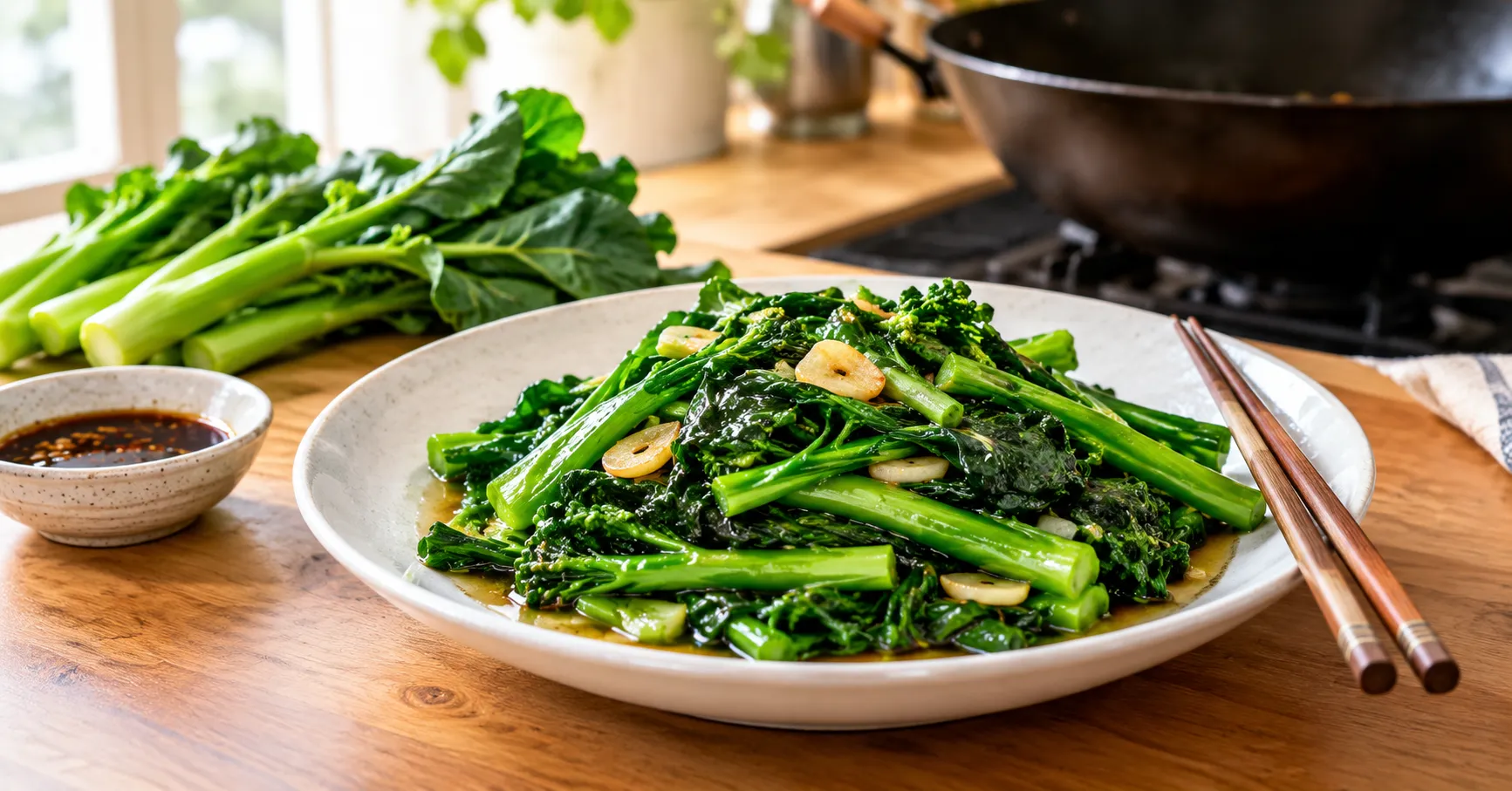
If you’ve ever ordered Chinese broccoli at a restaurant and wondered how they get it so perfectly tender yet still crisp, with that glossy, savory sauce clinging to every stalk, the answer is simpler than you’d think. A Chinese gai lan recipe really comes down to just a few techniques: quick cooking, a well-balanced sauce, and not overcrowding the pan. Once you know the basics, this dish comes together in under 15 minutes.
This guide covers everything you need to make gai lan at home with confidence. We’ll walk through what gai lan actually is, how to prep it properly, a classic stir- fry version with oyster sauce, an alternative for anyone avoiding it, a simple steamed method, and answers to the most common questions people have about cooking this vegetable. By the end, you’ll have a reliable go-to side dish for weeknight dinners or alongside any Chinese-inspired meal.
What Is Gai Lan, and How Is It Different From Regular Broccoli?
Gai lan, often called Chinese broccoli or Chinese kale, is a leafy green vegetable with thick, slightly flattened stalks, dark green leaves, and small white or yellow flower buds. Despite the name, it’s not closely related to the broccoli most people are used to. Where Western broccoli is grown for its dense flower head, gai lan is grown for its stalks and leaves, with the small flowering buds mostly left intact and eaten along with the rest of the plant.
In terms of flavor, gai lan has a mild, slightly bitter edge, similar to broccoli rabe but less sharp, balanced by a natural sweetness in the stalk. The texture is also distinct; the stalks stay pleasantly crisp-tender when cooked properly, while the leaves wilt down quickly, giving each bite a nice contrast between tender greens and a bit of bite from the stem.
How to Prep Gai Lan Before Cooking
Good prep makes a real difference with this vegetable, since the stalks and leaves cook at different rates. Start by trimming about half an inch off the woody base of each stalk, similar to trimming asparagus. If the stalks are particularly thick, more than about half an inch in diameter, it helps to peel the outer layer slightly with a vegetable peeler, since the skin can be a bit tough and fibrous.
Wash the gai lan thoroughly, since the leaves can trap a fair amount of grit. Some cooks also split very thick stalks lengthwise so they cook at the same rate as the thinner stems and leaves. Once trimmed and washed, you’re ready for whichever cooking method you choose.
Chinese Gai Lan Recipe with Oyster Sauce (Classic Stir Fry)
This is the version most people associate with restaurant-style Chinese broccoli, glossy, savory, and finished with a simple sauce.
Ingredients
- 1 bunch gai lan (about 1 pound), trimmed
- 2 tablespoons vegetable or peanut oil
- 3 garlic cloves, thinly sliced
- 2 tablespoons oyster sauce
- 1 tablespoon light soy sauce
- 1 teaspoon sugar
- 2 tablespoons water or chicken stock
- 1 teaspoon sesame oil
- A pinch of white pepper
Instructions
- Bring a large pot of water to a boil. Blanch the gai lan for 1 to 2 minutes, until the stalks turn bright green and just start to soften. Drain immediately and set aside. This step helps the vegetable cook evenly and quickly in the pan afterward.
- In a small bowl, mix the oyster sauce, soy sauce, sugar, and water or stock together, and set aside.
- Heat the vegetable oil in a wok or large skillet over high heat until shimmering. Add the garlic and stir-fry for about 15 seconds, until fragrant but not browned.
- Add the blanched gai lan to the pan and toss quickly for 1 to 2 minutes to coat it in the oil and garlic.
- Pour in the sauce mixture and toss everything together for another minute, until the sauce lightly coats the gai lan and turns glossy.
- Finish with the sesame oil and a pinch of white pepper, then transfer to a plate and serve immediately.
Chinese Gai Lan Recipe Without Oyster Sauce
For anyone avoiding oyster sauce due to allergies, dietary preferences, or simply not having it on hand, a Chinese gai lan recipe without oyster sauce can still deliver plenty of savory depth.
Substitute Sauce
- 1 tablespoon light soy sauce
- 1 tablespoon vegetarian stir-fry sauce or mushroom-based sauce
- 1 teaspoon rice vinegar
- 1 teaspoon sugar
- 2 tablespoons water or vegetable stock
Follow the exact same method as the classic stir-fry above, simply swapping in this sauce mixture in place of the oyster sauce blend. Mushroom-based sauces work particularly well here, since they carry a similar umami depth that oyster sauce typically provides, without using any shellfish-derived ingredients.
Steamed Gai Lan Recipe: A Lighter Option
If you’d rather skip the oil entirely, a steamed gai lan recipe is a simple, lighter alternative that still delivers great flavor.
- Trim and wash the gai lan as described above.
- Arrange the stalks in a single layer in a steamer basket, with thicker stalks facing the outer edge where they’ll get more direct steam exposure.
- Steam over boiling water for 3 to 5 minutes, until the stalks are just tender and the leaves have wilted.
- While steaming, heat 2 tablespoons of oil in a small pan until just smoking, then pour it over the warm, steamed gai lan.
- Drizzle with a little soy sauce or oyster sauce, and serve immediately.
This method, sometimes finished with hot oil poured directly over the vegetable, gives the dish a light, fresh flavor while still delivering that same savory finish.
Gai Lan Stir Fry Recipe: Tips for the Best Texture
A few small adjustments can make a noticeable difference in how your gai lan stir-fry turns out.
- Don’t skip the blanching step. It shortens the stir-fry time significantly and helps keep the color bright green rather than dull and overcooked.
- Use high heat. A properly hot wok or pan sears the vegetable quickly, keeping the stalks crisp-tender rather than soggy.
- Don’t overcrowd the pan. Cooking in batches if needed helps the gai lan cook evenly rather than steaming in its own moisture.
- Add sauce at the end. This keeps the vegetable from becoming overly soft or soggy, since the sauce only needs a minute or two to properly coat everything.
- Taste and adjust. Oyster sauce varies in saltiness between brands, so taste before adding extra soy sauce or salt.
Best Chinese Gai Lan Recipe: What Sets a Great Version Apart
What separates a genuinely great gai lan dish from an average one usually comes down to a few details: properly trimmed stalks so nothing is tough or stringy, a quick blanch to lock in color and texture, high heat during the stir-fry stage, and a sauce that’s balanced rather than overly sweet or salty. Fresh garlic, rather than garlic powder, also makes a noticeable difference in flavor depth.
Freshness of the vegetable itself matters quite a bit too. Look for gai lan with firm, unblemished stalks and leaves that aren’t yellowing or wilted, since older gai lan tends to be more bitter and less tender once cooked.
Frequently Asked Questions
Can I use broccolini instead of gai lan? Broccolini is a reasonable substitute in terms of texture, though it has a milder flavor and lacks the slight bitterness that gives gai lan its distinctive taste. The cooking method is very similar.
Do I need to peel the stalks? Peeling is only necessary for particularly thick stalks, where the outer layer can be tough and fibrous. Thinner stalks generally don’t need peeling.
Can I make this ahead of time? Gai lan is best cooked and served fresh, since it loses its crisp-tender texture and bright color if it sits for too long. The sauce, however, can be mixed ahead of time to save a step.
Is gai lan the same as Chinese broccoli? Yes, gai lan and Chinese broccoli refer to the same vegetable. Chinese kale is another common name used for it.
Where can I buy gai lan? Gai lan is commonly found in Asian grocery stores and increasingly in the produce section of larger supermarkets. Look for it near other leafy Asian greens like bok choy and choy sum.
Final Thoughts
Gai lan is one of those vegetables that seems intimidating until you realize how simple it actually is to cook well. With a quick blanch, a hot pan, and a well-balanced sauce, whether you go classic with oyster sauce, skip it entirely, or steam it for a lighter dish, you can recreate that restaurant-quality result at home in well under 20 minutes.
Give this recipe a try alongside your next stir-fry dinner or bowl of noodles, and don’t be surprised if it becomes a regular side dish in your weekly rotation. Once you’ve nailed the technique, cooking gai lan becomes second nature.
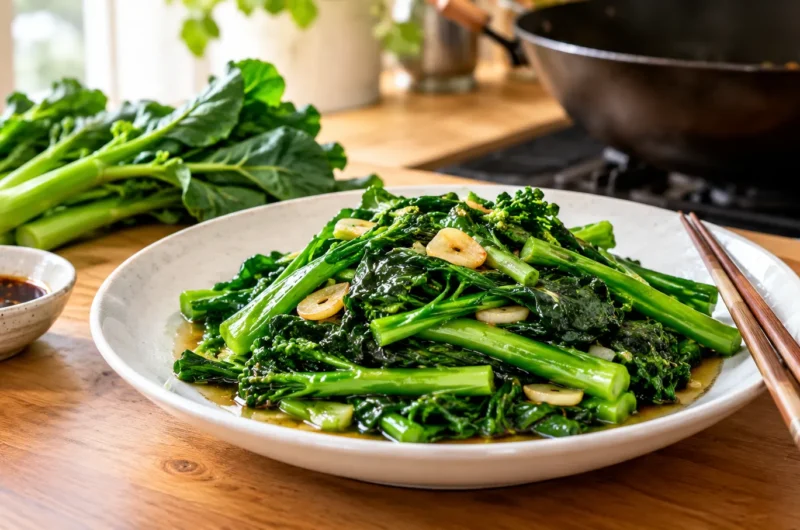
Chinese Gai Lan Recipe
Course: Side Dishes4
servings30
minutes40
minutes300
kcalIngredients
1 bunch gai lan (about 1 pound), trimmed
2 tablespoons vegetable or peanut oil
3 garlic cloves, thinly sliced
2 tablespoons oyster sauce
1 tablespoon light soy sauce
1 teaspoon sugar
2 tablespoons water or chicken stock
1 teaspoon sesame oil
A pinch of white pepper
Directions
- Bring a large pot of water to a boil. Blanch the gai lan for 1 to 2 minutes, until the stalks turn bright green and just start to soften. Drain immediately and set aside. This step helps the vegetable cook evenly and quickly in the pan afterward.
- In a small bowl, mix the oyster sauce, soy sauce, sugar, and water or stock together, and set aside.
- Heat the vegetable oil in a wok or large skillet over high heat until shimmering. Add the garlic and stir-fry for about 15 seconds, until fragrant but not browned.
- Add the blanched gai lan to the pan and toss quickly for 1 to 2 minutes to coat it in the oil and garlic.
- Pour in the sauce mixture and toss everything together for another minute, until the sauce lightly coats the gai lan and turns glossy.
- Finish with the sesame oil and a pinch of white pepper, then transfer to a plate and serve immediately.