
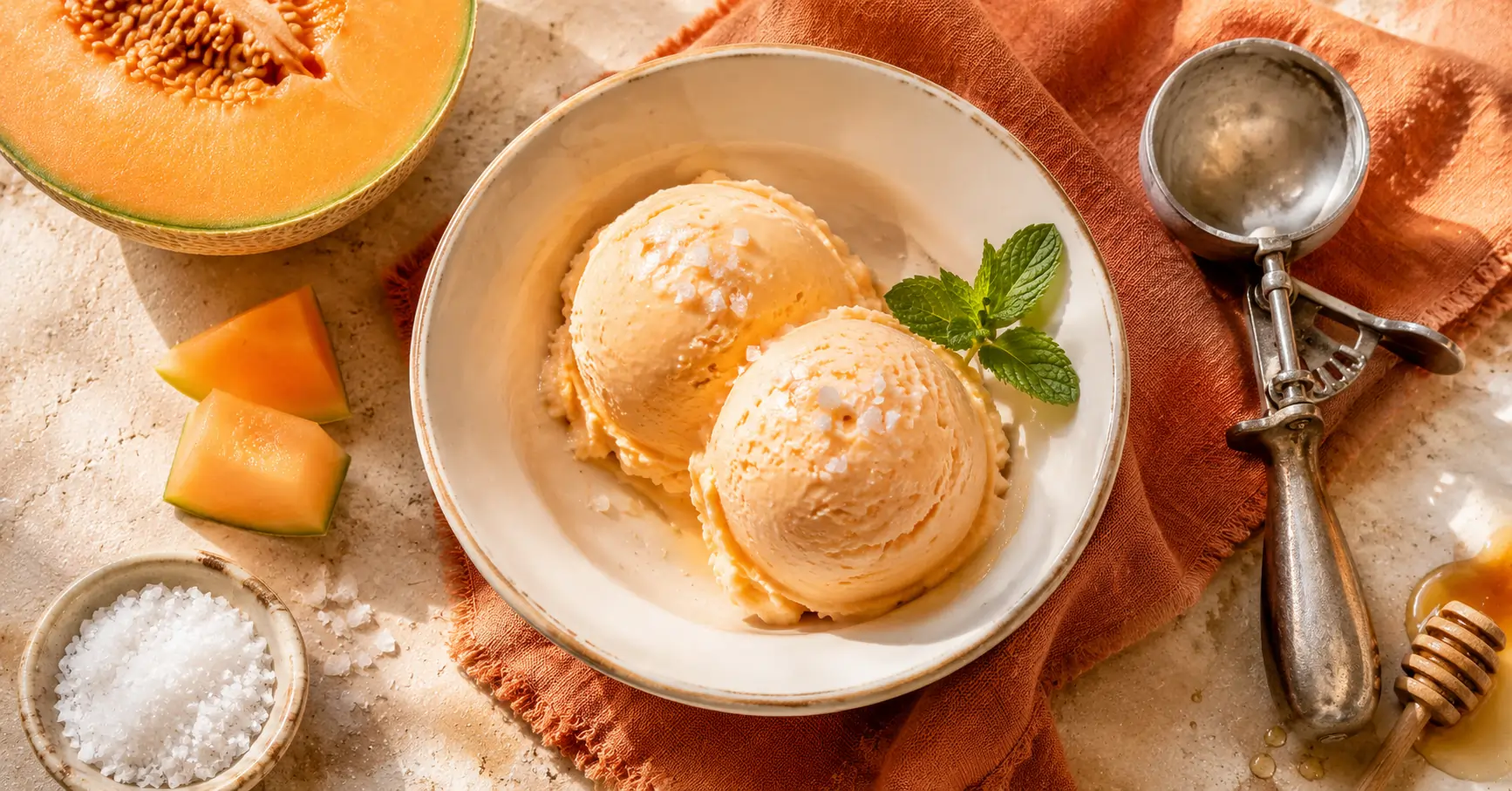
Cantaloupe ice cream sounds like something you’d stumble across at a fancy artisan gelato shop and immediately think “that’s odd, but I’ll try it.” Then you try it, and suddenly you’re questioning every ice cream decision you’ve ever made. That’s exactly what happened to me the first time I made this. The sea salt takes the whole thing somewhere genuinely unexpected and in the best possible way.
What Is Cantaloupe Sea Salt Ice Cream?
Cantaloupe sea salt ice cream is a smooth, creamy frozen dessert made by blending ripe cantaloupe melon into a rich custard or no-churn cream base, then finishing with a generous pinch of flaky sea salt that amplifies the melon’s natural sweetness and adds a sophisticated savoury edge. The result is ice cream that tastes intensely of summer floral, sweet, and slightly complex in a way that plain fruit ice creams rarely achieve.
The sea salt isn’t just a garnish. It’s doing real flavour work here. IMO, salt is the most underused ingredient in sweet desserts, and this recipe proves exactly why that needs to change.
Ingredients You’ll Need
For the Cantaloupe Base
- 1 large ripe cantaloupe (about 900g / 2lbs whole) yields roughly 600g prepared flesh
- 2 tbsp fresh lemon juice
- 2 tbsp honey or caster sugar, adjust based on how sweet your melon is
For the Ice Cream Base (No-Churn Method)
- 480ml (2 cups) double cream (heavy cream)
- 1 can (397g / 14oz) sweetened condensed milk
- 1 tsp pure vanilla extract
- ¼ tsp fine sea salt goes into the base
- ½ tsp flaky sea salt (Maldon or fleur de sel) for finishing and layering
For an Ice Cream Machine Version
Replace the condensed milk with:
- 4 large egg yolks
- 150g (¾ cup) caster sugar
- 480ml (2 cups) whole milk
- 240ml (1 cup) double cream
FYI, a very ripe cantaloupe is non-negotiable here. An underripe melon is watery and bland, and no amount of cream or sugar will rescue that flavour in the finished ice cream. Your cantaloupe should smell intensely fragrant at the stem end, almost floral. If it doesn’t smell like anything, put it back and wait a day or two.
How to Make Cantaloupe Sea Salt Ice Cream
Step 1: Prepare the Cantaloupe Puree
Halve the cantaloupe, scoop out the seeds, and cut the flesh away from the skin. Cut into rough chunks and place in a blender. Add the lemon juice and honey or sugar. Blend until completely smooth, about 60 seconds on high speed. Taste the puree; it should be intensely sweet and fragrant. Adjust sweetness if needed.
Now here’s the step that makes a real difference: strain the puree through a fine mesh sieve into a bowl, pressing it through with the back of a spoon. This removes the fibrous pulp and gives you a silky, clean puree that blends into the cream base without any texture issues. It takes an extra five minutes and is absolutely worth it.
Refrigerate the puree until cold for at least 1 hour. Adding warm puree to whipped cream deflates it and wrecks the texture.
Step 2: Make the No-Churn Ice Cream Base
Whip the cold double cream with an electric mixer until soft peaks form, billowy and light, not stiff. Overwhipped cream produces a grainy, heavy ice cream. Stop the moment the cream holds a gentle shape.
In a separate large bowl, combine the sweetened condensed milk, vanilla extract, and fine sea salt. Stir until combined. Pour in the cold cantaloupe puree and stir gently to incorporate. Fold this cantaloupe-condensed milk mixture into the whipped cream using a large spatula big, gentle strokes that preserve as much air as possible.
Step 3: Layer with Sea Salt and Freeze
Pour half the ice cream mixture into a 2-litre freezer-safe container. Scatter a generous pinch of flaky sea salt over the surface; those little salt crystals will create pockets of briny contrast throughout the ice cream as it freezes. Pour the remaining mixture on top and scatter another pinch of flaky salt across the surface.
Press cling film directly onto the surface before sealing to prevent ice crystals from forming on top. Freeze for a minimum of 6 hours overnight to get the cleanest, most scoopable result.
Step 4: Scoop and Serve
Remove from the freezer 8–10 minutes before serving. Cantaloupe ice cream freezes quite firmly due to the fruit’s water content and benefits from a slightly longer softening time than dairy-only ice creams. Scoop into chilled bowls and finish with a final small pinch of flaky sea salt directly on top of each scoop right before serving. That fresh salt hit on the surface is what takes this from great to genuinely memorable.
Tips for the Best Cantaloupe Sea Salt Ice Cream
- Choose your melon carefully. Smell the stem end deeply; a floral fragrance means peak ripeness. Weight matters too; a ripe cantaloupe feels heavy for its size.
- Two types of salt do two jobs. Fine sea salt in the base seasons the whole ice cream evenly. Flaky salt layered in and on top creates textural contrast and bursts of flavour. Use both.
- Don’t skip straining the puree. Cantaloupe pulp fibres don’t disappear in the freezer; they create a slightly stringy texture that’s noticeable in the finished scoop. Thirty seconds of straining prevents it entirely.
- Serve in chilled bowls. Cantaloupe ice cream melts slightly faster than denser ice creams. A cold bowl buys you a few extra minutes of perfect scooping texture.
- Storage: Keep in an airtight container for up to 2 weeks. Best in the first week when the melon flavour is at its brightest.
Frequently Asked Questions
Can I use honeydew or watermelon instead of cantaloupe? Yes, both work, though the flavour profiles differ noticeably. Honeydew gives a milder, slightly greener flavour. Watermelon produces a beautiful pink ice cream but contains significantly more water, so reduce the puree quantity by about 20% and strain it very thoroughly to avoid an icy texture.
Why does my cantaloupe ice cream taste bland? Almost always an underripe melon. The flavour of cantaloupe concentrates as the fruit ripens; an unripe melon has maybe 30% of the flavour impact of a perfectly ripe one. Always start with the ripest, most fragrant cantaloupe you can find.
Can I make this with an ice cream machine? Absolutely, use the custard base listed in the ingredients. Make a standard vanilla custard, cool it completely, blend in the strained cantaloupe puree, churn according to your machine’s instructions, and layer with flaky salt when transferring to the freezer container.
Final Thoughts
Cantaloupe sea salt ice cream is the kind of flavour that makes people pause mid-scoop and actually think about what they’re tasting, and that’s a rare and wonderful quality in a dessert. The melon is floral and sweet, the cream is rich, and those flakes of sea salt tie everything together in a way that’s genuinely hard to explain until you experience it yourself.
Make it at peak cantaloupe season when the melons are at their most fragrant and sweet. It’ll be one of the best ice creams you’ve ever made at home and probably one of the most interesting conversations you’ll have at your next dinner table.
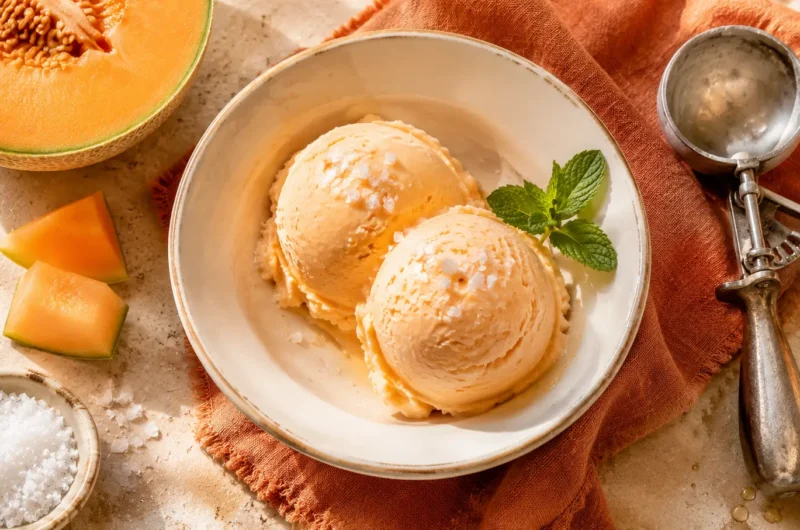
Cantaloupe Sea Salt Ice Cream Recipe
Course: Desserts4
servings30
minutes40
minutes300
kcalIngredients
For the Cantaloupe Base
1 large ripe cantaloupe (about 900g / 2lbs whole) yields roughly 600g prepared flesh
2 tbsp fresh lemon juice
2 tbsp honey or caster sugar, adjust based on how sweet your melon is
For the Ice Cream Base (No-Churn Method)
480ml (2 cups) double cream (heavy cream)
1 can (397g / 14oz) sweetened condensed milk
1 tsp pure vanilla extract
¼ tsp fine sea salt goes into the base
½ tsp flaky sea salt (Maldon or fleur de sel) for finishing and layering
For an Ice Cream Machine Version
Replace the condensed milk with:
4 large egg yolks
150g (¾ cup) caster sugar
480ml (2 cups) whole milk
240ml (1 cup) double cream
Directions
- Prepare the Cantaloupe Puree
Halve the cantaloupe, scoop out the seeds, and cut the flesh away from the skin. Cut into rough chunks and place in a blender. Add the lemon juice and honey or sugar. Blend until completely smooth, about 60 seconds on high speed. Taste the puree; it should be intensely sweet and fragrant. Adjust sweetness if needed.
Now here’s the step that makes a real difference: strain the puree through a fine mesh sieve into a bowl, pressing it through with the back of a spoon. This removes the fibrous pulp and gives you a silky, clean puree that blends into the cream base without any texture issues. It takes an extra five minutes and is absolutely worth it.
Refrigerate the puree until cold for at least 1 hour. Adding warm puree to whipped cream deflates it and wrecks the texture. - Make the No-Churn Ice Cream Base
Whip the cold double cream with an electric mixer until soft peaks form, billowy and light, not stiff. Overwhipped cream produces a grainy, heavy ice cream. Stop the moment the cream holds a gentle shape.
In a separate large bowl, combine the sweetened condensed milk, vanilla extract, and fine sea salt. Stir until combined. Pour in the cold cantaloupe puree and stir gently to incorporate. Fold this cantaloupe-condensed milk mixture into the whipped cream using a large spatula big, gentle strokes that preserve as much air as possible. - Layer with Sea Salt and Freeze
Pour half the ice cream mixture into a 2-litre freezer-safe container. Scatter a generous pinch of flaky sea salt over the surface; those little salt crystals will create pockets of briny contrast throughout the ice cream as it freezes. Pour the remaining mixture on top and scatter another pinch of flaky salt across the surface.
Press cling film directly onto the surface before sealing to prevent ice crystals from forming on top. Freeze for a minimum of 6 hours overnight to get the cleanest, most scoopable result. - Scoop and Serve
Remove from the freezer 8–10 minutes before serving. Cantaloupe ice cream freezes quite firmly due to the fruit’s water content and benefits from a slightly longer softening time than dairy-only ice creams. Scoop into chilled bowls and finish with a final small pinch of flaky sea salt directly on top of each scoop right before serving. That fresh salt hit on the surface is what takes this from great to genuinely memorable.