
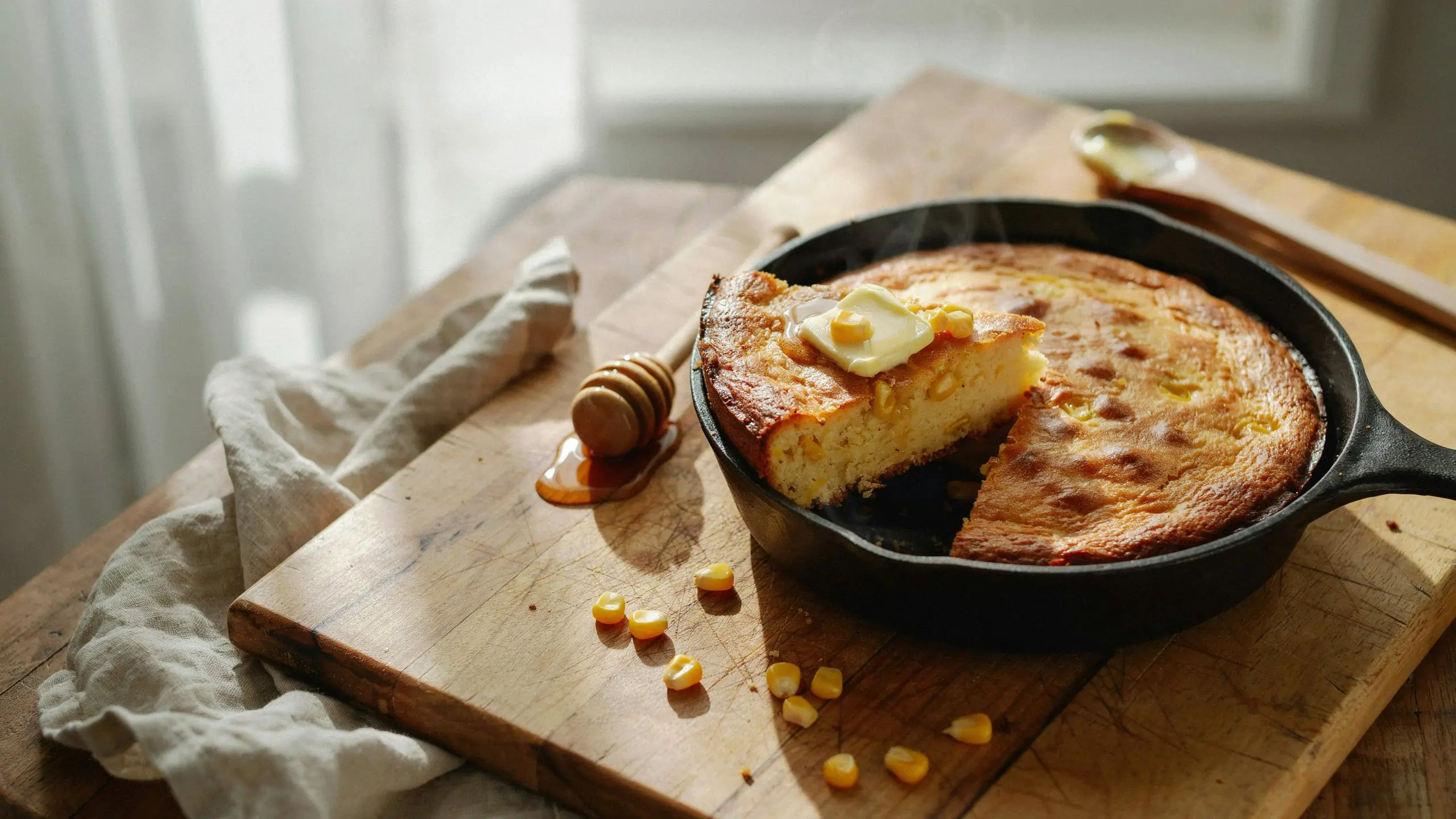
Want the best cornbread recipe you’ll ever make? Skip the box mix all you need is cornmeal, flour, butter, and a hot oven. I’ve made this easy cornbread recipe more times than I can count, and it still amazes me how something this simple turns out this good.
I’ll be honest: my first attempt years ago was dry and crumbly (rookie mistake too much cornmeal, not enough fat). It took a few tries to figure out that the secret to truly moist cornbread isn’t some fancy trick. It’s just balance.
This homemade cornbread recipe skips the preservatives and mystery ingredients hiding in a Jiffy box. Whether you want a traditional southern cornbread recipe for Sunday dinner or something sweeter for the holidays, I’ve got the from-scratch version that beats the shortcut every single time. Grab your mixing bowl let’s get baking.
Cornbread Recipe Ingredients
What do you need for cornbread? Cornmeal, flour, sugar, baking powder, salt, butter, milk, and eggs that’s the whole list for this cornbread recipe from scratch. No specialty store trip required.
Here’s what I grab every time:
- 1 cup cornmeal – yellow, medium grind works best for that classic texture
- 1 ½ cups all-purpose flour
- ½ cup sugar – less if you’re going for a more savory, southern-style loaf (more on that later)
- 1 ½ tablespoons baking powder – this is what gives it lift, so don’t skimp
- 1 teaspoon salt
- ½ cup butter, melted
- ¼ cup oil – keeps things extra moist alongside the butter
- 1 ¼ cups milk – or swap for buttermilk (see below)
- 2 large eggs
That’s it. Simple pantry stuff, nothing exotic.
Now, a few swaps I genuinely recommend trying:
For a buttermilk cornbread recipe, just replace the regular milk with buttermilk, cup for cup. It adds a slight tang and I’m not entirely sure why, chemistry-wise, but I suspect it’s the acidity makes the crumb noticeably more tender. Once you try it, plain milk feels like a downgrade.
Want extra moisture and a hint of sweetness? Stir in a cornbread recipe with creamed corn twist: add one cup of canned creamed corn to your wet ingredients. It sounds like a small addition, but it makes a real difference in texture.
Baking for someone gluten-sensitive? A gluten free cornbread recipe is easier than you’d think swap the all-purpose flour for a 1:1 gluten-free blend. I’ve seen home bakers report zero difference in taste or texture, which honestly surprised me the first time I tried it myself.
How to Make Cornbread (Step-by-Step)
Making cornbread takes about 10 minutes of prep and roughly 30 minutes in the oven. Follow these steps and you’ll have a golden, moist loaf ready before you know it.
- Preheat your oven to 350°F (175°C) and grease your baking pan. A 9×13-inch pan works great for a standard batch but if you want those irresistible crispy edges, keep reading for the skillet method below.
- Whisk together the dry ingredients. In a large bowl, combine cornmeal, flour, sugar, baking powder, and salt. Give it a good whisk this helps distribute the baking powder evenly, so you don’t end up with weird flat spots.
- Mix the wet ingredients separately. In a medium bowl, stir together melted butter, oil, milk (or buttermilk), and eggs until combined.
- Combine wet and dry. Pour the wet mixture into the dry ingredients and stir until just combined. This is the one step where less effort actually pays off overmixing leads to tough, dense cornbread instead of that soft, moist texture you’re after.
- Pour into your prepared pan and smooth the top with a spatula.
- Bake for 30–40 minutes, until the top turns golden and a toothpick inserted in the center comes out clean (or with just a few crumbs no wet batter).
- Cool for 15–20 minutes before slicing. I know it’s tempting to dig in right away, but letting it rest helps it hold together properly when you cut into it.
Want that classic skillet-style crust? Here’s the trick I swear by for a cornbread skillet recipe: preheat a cast-iron skillet in the oven while you mix the batter. Once it’s screaming hot, add a tablespoon of butter, swirl it around to coat the bottom, then pour in your batter. That sizzle you hear when the batter hits the pan? That’s what gives you those crispy, golden edges everyone fights over.
How to Store Cornbread
Cornbread stays fresh at room temperature for up to 3 days, or in the fridge for up to a week. The key is keeping it in an airtight container so it doesn’t dry out cornbread has a way of turning into a sad, crumbly brick if you leave it exposed to air.
Here’s what actually works:
- Room temperature: Once fully cooled, store in an airtight container or wrap tightly in foil. It’ll keep for 2–3 days this way. This is honestly my go-to for cornbread I know we’ll finish within a few days.
- Refrigerator: For longer storage, pop it in the fridge in an airtight container it’ll last up to 1 week. Just know that refrigeration can dry it out slightly, so a quick reheat helps bring back that fresh-baked texture.
- Freezer: Cornbread actually freezes really well, which surprised me the first time I tried it. Wrap individual slices in plastic wrap, then place them in a freezer bag. It’ll keep for up to 3 months. Thaw at room temperature or reheat straight from frozen.
Reheating tips: For the best texture, warm slices in the oven at 350°F for about 10 minutes this helps restore that just-baked crumb far better than the microwave does. If you’re short on time, though, 15–20 seconds in the microwave works in a pinch (just don’t expect the same crispy edges).
One thing I’d avoid: leaving cornbread in a cast-iron skillet overnight. It can pick up a slightly metallic taste from the pan learned that one the hard way.
Cornbread Variations to Try
One of the best things about cornbread is how easily it adapts. Change up a few ingredients, and you’ve got a completely different flavor profile. Here are the variations worth trying.
Southern Cornbread
A true southern cornbread recipe skips most (or all) of the sugar it’s meant to be savory, not sweet. This is the best southern cornbread recipe style: cornmeal-forward, slightly crumbly, and traditionally baked in a cast-iron skillet. If you grew up in the South, you probably know exactly what I’m talking about and if you didn’t, this version might just convert you.
Sweet Cornbread
On the flip side, a sweet cornbread recipe leans into more sugar (sometimes even a drizzle of honey mixed into the batter) for a dessert-adjacent, cake-like texture. This is the version most Northern-style recipes lean toward, and it’s fantastic with a pat of butter melting on top.
Savoury Cornbread
Want something more filling? A savoury cornbread recipe adds shredded cheddar cheese, herbs like rosemary or thyme, or even crumbled bacon into the batter. This is the version I make when cornbread needs to be more of a meal than a side dish.
Mexican Cornbread
For a Mexican cornbread recipe, stir in diced jalapeños, a can of green chilies, shredded pepper jack cheese, and a cup of corn kernels. It’s got more texture, more heat, and honestly, more personality than the basic version.
Jalapeño Cornbread
If you just want the heat without the full Mexican-style overhaul, a jalapeno cornbread recipe is simple: dice up a quarter cup of fresh or pickled jalapeños and fold them into the batter before baking. Add cheese too, if you’re feeling extra.
Gluten-Free Cornbread
As mentioned earlier, a gluten free cornbread recipe just needs a 1:1 gluten-free flour swap. No other changes required the texture holds up surprisingly well.
Jiffy-Style Shortcut
Short on time? A doctored-up jiffy cornbread recipe (or cornbread recipe jiffy, however you search it) starts with the boxed mix but adds an egg, a splash of buttermilk, and a can of creamed corn to boost the moisture and flavor. It’s not quite from scratch, but it’s a solid weeknight shortcut when you’re in a pinch.
Traditional From-Scratch
And if you want the real deal, this entire base recipe already is a traditional cornbread recipe no shortcuts, no box mix, just cornmeal, flour, and a hot oven.
Tips for Perfect Cornbread Every Time
A few small things make the difference between good cornbread and great cornbread. Here’s what I’ve learned some of it the hard way.
Why does cornbread crumble?
If your cornbread falls apart when you cut into it, it’s usually one of these culprits:
- Too much cornmeal, not enough flour the gluten in flour is what holds everything together, so if cornmeal dominates, the structure suffers
- Too much fat more butter doesn’t mean more flavor here; it actually weakens the crumb
- Skipping the eggs eggs add both structure and moisture, so don’t leave them out unless you’re specifically substituting
Don’t overmix the batter.
I mentioned this in the instructions, but it’s worth repeating: mix until just combined. A few lumps are totally fine. Overmixing develops the gluten too much, and you’ll end up with something dense and tough instead of light and moist.
Use a hot skillet for crispy edges.
This is genuinely my favorite tip. Preheating a cast-iron skillet before adding the batter creates that signature crispy, golden crust that separates good cornbread from great cornbread. It’s a small step, but it makes a noticeable difference.
Add-ins are your friend.
Don’t be afraid to customize. Shredded cheese, crumbled bacon, diced garlic, or a cup of corn kernels can all be folded into the batter without messing up the texture as long as you don’t overload it. I’d stick to about 1 cup of add-ins total, max.
Check for doneness properly.
A toothpick inserted into the center should come out clean, or with just a few dry crumbs not wet batter. If you’re unsure, gently press the top: it should spring back rather than leave an indent.
Let it cool before slicing.
I know, I know nobody wants to wait. But cutting into cornbread too early can cause it to fall apart, since it’s still setting as it cools.
Frequently Asked Questions
What’s the difference between southern and northern-style cornbread?
Southern cornbread is savory with little to no sugar, while northern-style tends to be sweeter and more cake-like. Both use the same basic ingredients the sugar level is really what separates a southern cornbread recipe from its northern counterpart.
Can I make cornbread gluten-free?
Yes swap the all-purpose flour for a 1:1 gluten-free blend, and the rest of the recipe stays the same. A gluten free cornbread recipe made this way holds its texture surprisingly well, based on what plenty of home bakers report after trying it themselves.
Can I use a Jiffy mix and doctor it up?
Absolutely. Add an egg, a splash of buttermilk, and even a can of creamed corn to a basic jiffy cornbread recipe to boost the moisture and flavor. It won’t be quite as good as from-scratch, but it’s a solid shortcut on a busy weeknight.
What’s the best pan for baking cornbread skillet, glass, or metal?
Any oven-safe pan works, but a preheated cast-iron skillet gives you the crispiest edges. This is the secret behind most cornbread skillet recipe methods the sizzle when batter hits a hot pan is what creates that golden crust.
Can I make cornbread ahead for Thanksgiving dressing or stuffing?
Yes, and honestly, it’s better that way. Bake your cornbread a day or two ahead, let it dry out slightly, then cube it for your cornbread dressing recipe or cornbread stuffing recipe. Slightly stale cornbread actually absorbs the broth and seasonings better than fresh a trick a lot of southern cornbread dressing recipe cooks swear by.
How do I keep cornbread moist?
Don’t overmix the batter, don’t overbake it, and consider adding buttermilk or creamed corn to the wet ingredients. A truly moist cornbread recipe comes down to balancing fat, liquid, and bake time pull it out the moment a toothpick comes out clean, not a minute later.
Final Thoughts
At the end of the day, cornbread is one of those recipes that proves simple is often better. Cornmeal, flour, a little sugar, and a hot oven that’s really all it takes to make something this good. No box mix required, and honestly, once you’ve made it from scratch a few times, you probably won’t want to go back.
What I love most about this recipe is how flexible it is. Go savory with a southern-style version, sweeten it up for dessert, or throw in jalapeños and cheese when you want something with a bit more kick. There’s no wrong way to make it your own.
Got leftovers? Don’t just reheat and repeat cube it up for a cornbread casserole, toss it into a cornbread salad, or bake a batch as cornbread muffins for grab-and-go breakfasts. This bread has more second-life potential than people give it credit for.
So preheat that oven, grab your cast-iron skillet if you’ve got one, and give this a try. Once you taste truly moist, homemade cornbread, that Jiffy box is going to feel like a distant memory.
If you make it, I’d genuinely love to hear how it turned out and if you’ve got your own twist on the recipe, share it below.
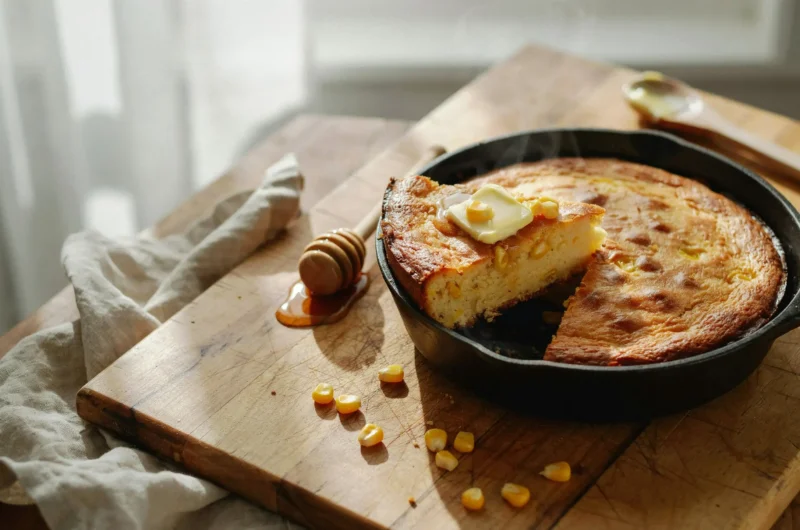
Easy Cornbread Recipe (Moist, Traditional & From Scratch)
Course: Desserts4
servings30
minutes40
minutes300
kcalIngredients
1 cup cornmeal – yellow, medium grind works best for that classic texture
1 ½ cups all-purpose flour
½ cup sugar – less if you’re going for a more savory, southern-style loaf (more on that later)
1 ½ tablespoons baking powder – this is what gives it lift, so don’t skimp
1 teaspoon salt
½ cup butter, melted
¼ cup oil – keeps things extra moist alongside the butter
1 ¼ cups milk – or swap for buttermilk (see below)
2 large eggs
Directions
- Preheat your oven to 350°F (175°C) and grease your baking pan. A 9×13-inch pan works great for a standard batch but if you want those irresistible crispy edges, keep reading for the skillet method below.
- Whisk together the dry ingredients. In a large bowl, combine cornmeal, flour, sugar, baking powder, and salt. Give it a good whisk this helps distribute the baking powder evenly, so you don’t end up with weird flat spots.
- Mix the wet ingredients separately. In a medium bowl, stir together melted butter, oil, milk (or buttermilk), and eggs until combined.
- Combine wet and dry. Pour the wet mixture into the dry ingredients and stir until just combined. This is the one step where less effort actually pays off overmixing leads to tough, dense cornbread instead of that soft, moist texture you’re after.
- Pour into your prepared pan and smooth the top with a spatula
- Bake for 30–40 minutes, until the top turns golden and a toothpick inserted in the center comes out clean (or with just a few crumbs no wet batter).
- Cool for 15–20 minutes before slicing. I know it’s tempting to dig in right away, but letting it rest helps it hold together properly when you cut into it.