
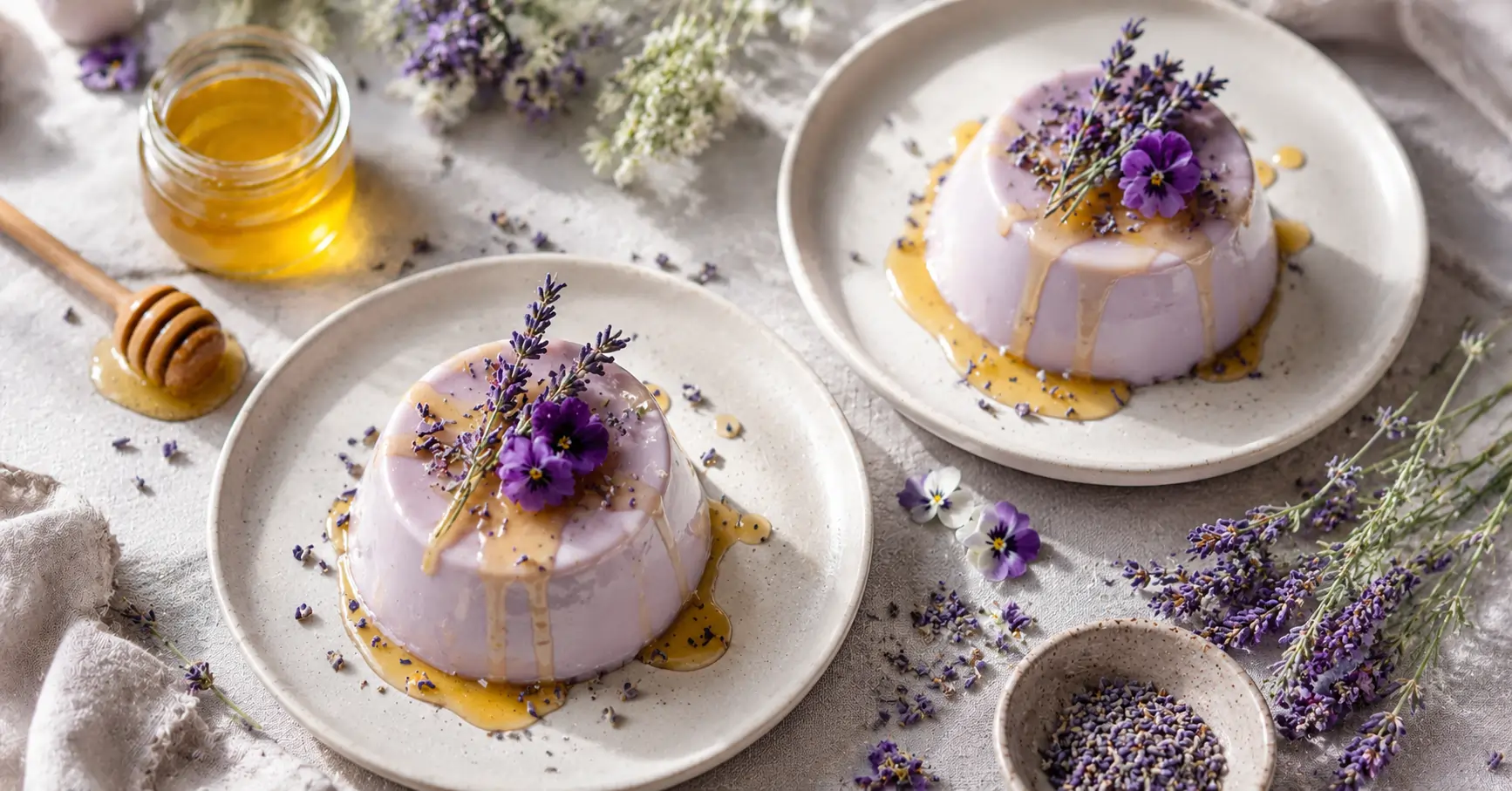
Lavender honey panna cotta is a silky, no-bake Italian dessert made by infusing warm cream with dried culinary lavender and honey, then setting it with gelatine until perfectly wobbly. It looks like something from a fancy restaurant, and I promise you, it takes about 20 minutes of actual effort.
The first time I made this, I was half-convinced I’d produce something that tasted like a soap dish. Lavender has a reputation for being one of those ingredients that tips from elegant into overwhelming if you blink at it wrong. But when you get the balance right? Pure magic. Floral, creamy, subtly sweet, it’s the kind of dessert that makes people ask, “Wait, you made this?”
What Is Lavender Honey, Panna Cotta?
Lavender honey panna cotta is a chilled Italian cream dessert that blends the floral notes of culinary lavender with the warm sweetness of honey. The name “panna cotta” literally means “cooked cream” in Italian, and the whole concept is beautifully simple.
Unlike mousse or cheesecake, panna cotta sets purely from gelatine, no eggs, no baking, no water bath drama. The texture sits somewhere between a firm custard and a cloud. IMO, it’s one of the most underrated desserts a home cook can master.
Ingredients You’ll Need
This recipe serves 4 and needs very little equipment beyond a saucepan and some ramekins.
For the Panna Cotta:
- 500ml double cream
- 150ml whole milk
- 3 tbsp good-quality honey (floral varieties like acacia or wildflower work beautifully)
- 2 tsp dried culinary lavender (not potpourri, please, not potpourri)
- 2½ tsp powdered gelatine (or 4 gelatine leaves)
- 1 tsp vanilla extract
- Pinch of salt
For the Honey Drizzle (Optional but Recommended):
- 3 tbsp honey
- 1 tsp fresh lemon juice
- A few fresh lavender sprigs or edible flowers to garnish
One critical note: always use culinary-grade dried lavender. The stuff sold for bath products often contains additives that taste genuinely terrible. Most health food shops and specialist baking suppliers carry the culinary version. Don’t cut corners here.
Step-by-Step Method
Step 1: Bloom the Gelatine
Sprinkle your powdered gelatine over 3 tbsp of cold milk and leave it to sit for 5 minutes. This “blooming” step is non-negotiable; it ensures the gelatine dissolves evenly and prevents lumps in your finished panna cotta.
If you’re using gelatine leaves instead, submerge them in cold water for 5 minutes until soft, then squeeze out the excess water before adding. Both methods work well. I’ve used both, depending on what’s in my cupboard.
Step 2: Infuse the Cream with Lavender
Combine the double cream, remaining milk, honey, lavender, vanilla, and salt in a saucepan over medium-low heat. Warm the mixture gently, stirring occasionally, until it just begins to steam. You’re aiming for around 70°C, not a full boil.
Remove the pan from the heat and let the lavender steep for 10 minutes. This is where the flavour develops. Taste it after 10 minutes if you want a stronger floral note, steep for another 5. Just don’t go beyond 20 minutes, or the lavender starts tasting a bit sharp and medicinal.
Step 3: Strain and Combine
Pour the cream mixture through a fine mesh sieve to remove all the lavender buds, then stir in the bloomed gelatine while the cream is still warm. Whisk gently until the gelatine dissolves completely. This usually takes about a minute of stirring.
Make sure there are no visible gelatine granules left. Undissolved gelatine creates rubbery patches in the finished dessert, and nobody wants that surprise.
Step 4: Pour and Chill
Lightly oil four ramekins or dessert glasses with a neutral oil (like sunflower), then pour the cream mixture evenly between them. The light oiling makes unmoulding much easier later; skip it if you’re serving directly in glasses.
Let the panna cottas cool to room temperature, then cover with cling film and refrigerate for at least 4 hours, though overnight is genuinely better. The texture improves significantly with a longer chill.
Step 5: Unmould and Serve
Run a thin knife around the edge of each ramekin, place a plate on top, and flip confidently in one smooth motion. Hesitating causes more disasters than just committing to the flip. Give it a gentle shake if needed; it should release cleanly.
Drizzle with honey, add a squeeze of lemon juice, and garnish with a few fresh lavender sprigs or edible flowers. Done.
Tips for Getting the Perfect Set
Getting the texture right is everything with panna cotta. Here’s what actually matters:
- Don’t overheat the cream. Boiling breaks down the gelatin’s setting power and can cause the finished dessert to weep liquid.
- Measure your gelatine precisely. Too little and it won’t set. Too much and you’ll end up chewing your dessert like rubber.
- Taste the infused cream before adding gelatine. This is your last chance to adjust sweetness or floral intensity.
- Chill on a flat shelf. Sounds obvious, I’ve ended up with wonky panna cottas because I didn’t check. A lopsided set is hard to recover from.
Can You Make Lavender Panna Cotta Ahead?
Yes, lavender honey panna cotta is an ideal make-ahead dessert that keeps well in the fridge for up to 3 days. Cover each ramekin with cling film to prevent the surface absorbing fridge odours.
FYI, you can also freeze panna cotta, though the texture softens slightly after thawing. For best results, make it fresh and serve within 48 hours. The honey drizzle should always be added just before serving.
Variations Worth Trying
Once you nail the base recipe, you can take it in some genuinely interesting directions:
- Lemon and lavender: Add the zest of one lemon to the infusing cream for a brighter, citrusy edge
- Earl Grey and honey: Swap lavender for 2 Earl Grey teabags; the bergamot plays beautifully with honey
- Vegan version: Replace gelatine with 1½ tsp agar agar powder and swap double cream for full-fat coconut cream. The texture is slightly firmer but still delicious.
- Berry compote topping: A warm strawberry or blueberry compote cuts through the richness perfectly
Why This Recipe Works Every Time
The combination of high-fat double cream with a gentle gelatine set creates that signature silky wobble, firm enough to unmould, soft enough to melt on the tongue. The honey does double duty here: it sweetens the cream while adding a subtle floral complexity that amplifies the lavender without competing with it.
What I love about this recipe is that it’s genuinely forgiving. Get the lavender steep time slightly wrong? You’ll still get a lovely result. The only real failure point is gelatine measurement, and as long as you’re precise there, you’re in safe territory.
Final Thoughts
Lavender honey panna cotta sits in that sweet spot of desserts that look wildly impressive but require almost no skill, just patience, good ingredients, and a confident flip at the end. It’s elegant enough for a dinner party and simple enough to make on a weekday evening when you want something a little special.
Give it a try, trust the steep, and don’t skip the honey drizzle. That last touch ties the whole thing together beautifully. Happy cooking!
Creamy Lavender Honey Panna Cotta Recipe
Course: Desserts4
servings30
minutes40
minutes300
kcalIngredients
500ml double cream
150ml whole milk
3 tbsp good-quality honey (floral varieties like acacia or wildflower work beautifully)
2 tsp dried culinary lavender (not potpourri, please, not potpourri)
2½ tsp powdered gelatine (or 4 gelatine leaves)
1 tsp vanilla extract
Pinch of salt3 tbsp honey
1 tsp fresh lemon juice
A few fresh lavender sprigs or edible flowers to garnish
Directions
- Bloom the Gelatine
Sprinkle your powdered gelatine over 3 tbsp of cold milk and leave it to sit for 5 minutes. This “blooming” step is non-negotiable; it ensures the gelatine dissolves evenly and prevents lumps in your finished panna cotta. - Infuse the Cream with Lavender
Combine the double cream, remaining milk, honey, lavender, vanilla, and salt in a saucepan over medium-low heat. Warm the mixture gently, stirring occasionally, until it just begins to steam. You’re aiming for around 70°C, not a full boil - Strain and Combine
Pour the cream mixture through a fine mesh sieve to remove all the lavender buds, then stir in the bloomed gelatine while the cream is still warm. Whisk gently until the gelatine dissolves completely. This usually takes about a minute of stirring. - Unmould and Serve
Run a thin knife around the edge of each ramekin, place a plate on top, and flip confidently in one smooth motion. Hesitating causes more disasters than just committing to the flip. Give it a gentle shake if needed; it should release cleanly.