
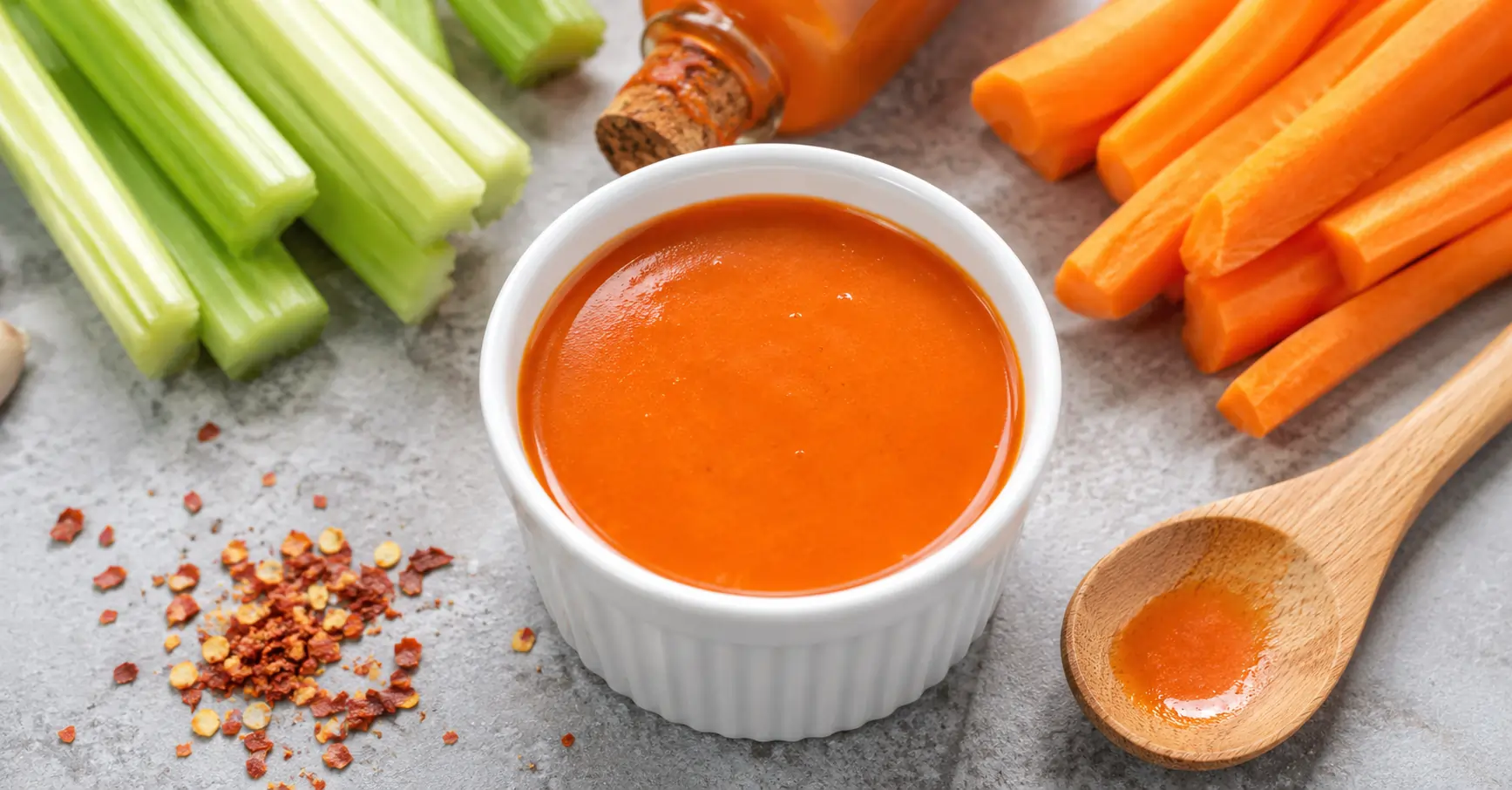
Let’s be real, buffalo sauce is one of those condiments that can make or break a meal, but the bottled stuff is often loaded with butter and hidden calories you didn’t sign up for. I started making my own low-calorie version a while back when I was tracking macros, and honestly? It tastes just as good, sometimes better. This recipe gives you that classic tangy, spicy buffalo flavor without the calorie guilt trip.
What Makes Buffalo Sauce “Low Calorie”?
A low- calorie buffalo sauce swaps out most or all of the butter for a lighter alternative while keeping the hot sauce base intact, which is where the real flavor lives anyway. Traditional buffalo sauce gets a huge chunk of its calories from butter, sometimes a full stick for a single batch. Cut that out (or replace it smartly), and you’re left with a sauce that’s almost entirely flavor and almost no extra calories.
I’ll be honest, the first time I made a “light” buffalo sauce, I expected it to taste watered down. It didn’t. Turns out hot sauce is doing most of the heavy lifting flavor-wise, and butter is mostly there for richness, which you can recreate other ways.
Ingredients for Low-Calorie Buffalo Sauce
Here’s what you’ll need:
- ½ cup hot sauce (Frank’s RedHot is the classic choice)
- 1 tablespoon light butter or butter substitute (or skip entirely for an even lighter version)
- 1 teaspoon garlic powder
- ½ teaspoon onion powder
- ½ teaspoon smoked paprika
- 1 teaspoon white vinegar
- 1 teaspoon honey or a sugar substitute (optional, balances the heat)
- ¼ teaspoon Worcestershire sauce (optional, adds depth)
- Pinch of cayenne (if you want extra heat)
This recipe comes in at roughly 5-10 calories per tablespoon, depending on whether you include the butter substitute. Compare that to traditional buffalo sauce, which can run 30-50 calories per tablespoon, thanks to all that butter, a pretty significant difference if you’re tracking intake.
How to Make Low-Calorie Buffalo Sauce
Step 1: Heat the Hot Sauce Base
Pour the hot sauce into a small saucepan over low heat. You don’t need it boiling, just warm enough to help everything blend smoothly. This step also takes the “raw” edge off the vinegar in the hot sauce, mellowing it slightly.
Step 2: Add the Butter (or Skip It)
Stir in the light butter or butter substitute until fully melted. If you’re skipping butter entirely, this step is optional. The sauce will be slightly thinner and tangier, but still totally delicious. I’ve made it both ways, and honestly, both versions have their place depending on what I’m using it for.
Step 3: Season It Up
Add the garlic powder, onion powder, smoked paprika, and vinegar. These ingredients build the depth that bottled sauces often achieve with extra fat instead. Stir well and let it simmer on low for 2-3 minutes.
Step 4: Balance the Flavor
Stir in the honey (or sugar substitute) and Worcestershire sauce if using. This step is small but important. Buffalo sauce without any sweetness can taste sharp and one-dimensional. Just a touch of sweetness rounds everything out without adding many calories at all.
Step 5: Taste and Adjust
Give it a taste. Too spicy? Add a touch more honey. Not spicy enough? Toss in that pinch of cayenne. Remove from heat once it reaches a flavor balance you’re happy with, then let it cool slightly before using.
How to Use Low-Calorie Buffalo Sauce
This sauce works just like the full-fat version; you’re really not missing out here. Try it on:
- Grilled or baked chicken, toss shredded chicken in it for low-calorie buffalo chicken
- Cauliflower bites, roasted cauliflower tossed in this sauce, are a fantastic veggie-forward option
- Salads drizzled over a chicken salad for instant flavor
- Wraps and sandwiches add a kick without the extra fat
- Wings, yes, even classic wings work great with the lighter version
- Dipping sauce for veggies, carrots, and celery, obviously
Store leftovers in an airtight container in the fridge for up to 2 weeks. It keeps remarkably well thanks to the vinegar content in the hot sauce.
Comparing Light vs. Traditional Buffalo Sauce
Flavor Differences
Traditional buffalo sauce has a richer, more rounded mouthfeel because of the butter, while the low- calorie version leans more tangy and sharp. Is one “better”? IMO, it depends on what you’re using it for. For wings, I sometimes miss the richness of the original. For salads or veggie dips, the lighter version often tastes fresher and less heavy.
Texture Differences
The traditional version tends to be glossier and clings to food better, thanks to the fat content. The low- calorie version is thinner, which actually makes it better for things like marinades or salad dressings where a thick, clingy sauce isn’t really the goal anyway.
Tips for the Best Results
A few things I’ve learned from making this more times than I can count:
- Use a good-quality hot sauce. Since it’s doing most of the flavor work here, a bland hot sauce makes for a bland buffalo sauce.
- Don’t skip the vinegar. It brightens everything and helps mimic the tang that butter would otherwise mute.
- Adjust sweetness to taste. Some hot sauces are already slightly sweet, so you might need less honey than you think.
- Make a big batch. Since it keeps so well, doubling or tripling the recipe saves time later.
- Experiment with heat levels. Cayenne, extra hot sauce, or even a dash of chipotle powder can all change the heat profile.
Final Thoughts
Making a low-calorie buffalo sauce at home is honestly one of those small swaps that makes a big difference if you’re watching your intake but refuse to give up bold flavors. With just a handful of pantry staples and about 10 minutes, you get a sauce that’s spicy, tangy, and seriously versatile.
Give this recipe a shot next time you’re craving buffalo flavor, and don’t be surprised if it becomes your new go-to. And hey, if anyone asks why your “diet” food still tastes amazing, just smile and let them wonder.
Low-Calorie Buffalo Sauce Recipe
Course: Sauce Recipes4
servings30
minutes40
minutes300
kcalIngredients
½ cup hot sauce (Frank’s RedHot is the classic choice)
1 tablespoon light butter or butter substitute (or skip entirely for an even lighter version)
1 teaspoon garlic powder
½ teaspoon onion powder
½ teaspoon smoked paprika
1 teaspoon white vinegar
1 teaspoon honey or a sugar substitute (optional, balances the heat)
¼ teaspoon Worcestershire sauce (optional, adds depth)
Pinch of cayenne (if you want extra heat)
Directions
- Heat the Hot Sauce Base
Pour the hot sauce into a small saucepan over low heat. You don’t need it boiling, just warm enough to help everything blend smoothly. - Add the Butter (or Skip It)
Stir in the light butter or butter substitute until fully melted. If you’re skipping butter entirely, this step is optional. The sauce will be slightly thinner and tangier, but still totally delicious. - Season It Up
Add the garlic powder, onion powder, smoked paprika, and vinegar. These ingredients build the depth that bottled sauces often achieve with extra fat instead - Balance the Flavor
Stir in the honey (or sugar substitute) and Worcestershire sauce if using. This step is small but important - Taste and Adjust
Give it a taste. Too spicy? Add a touch more honey. Not spicy enough? Toss in that pinch of cayenne. Remove from heat once it reaches a flavor balance you’re happy with, then let it cool slightly before using.