
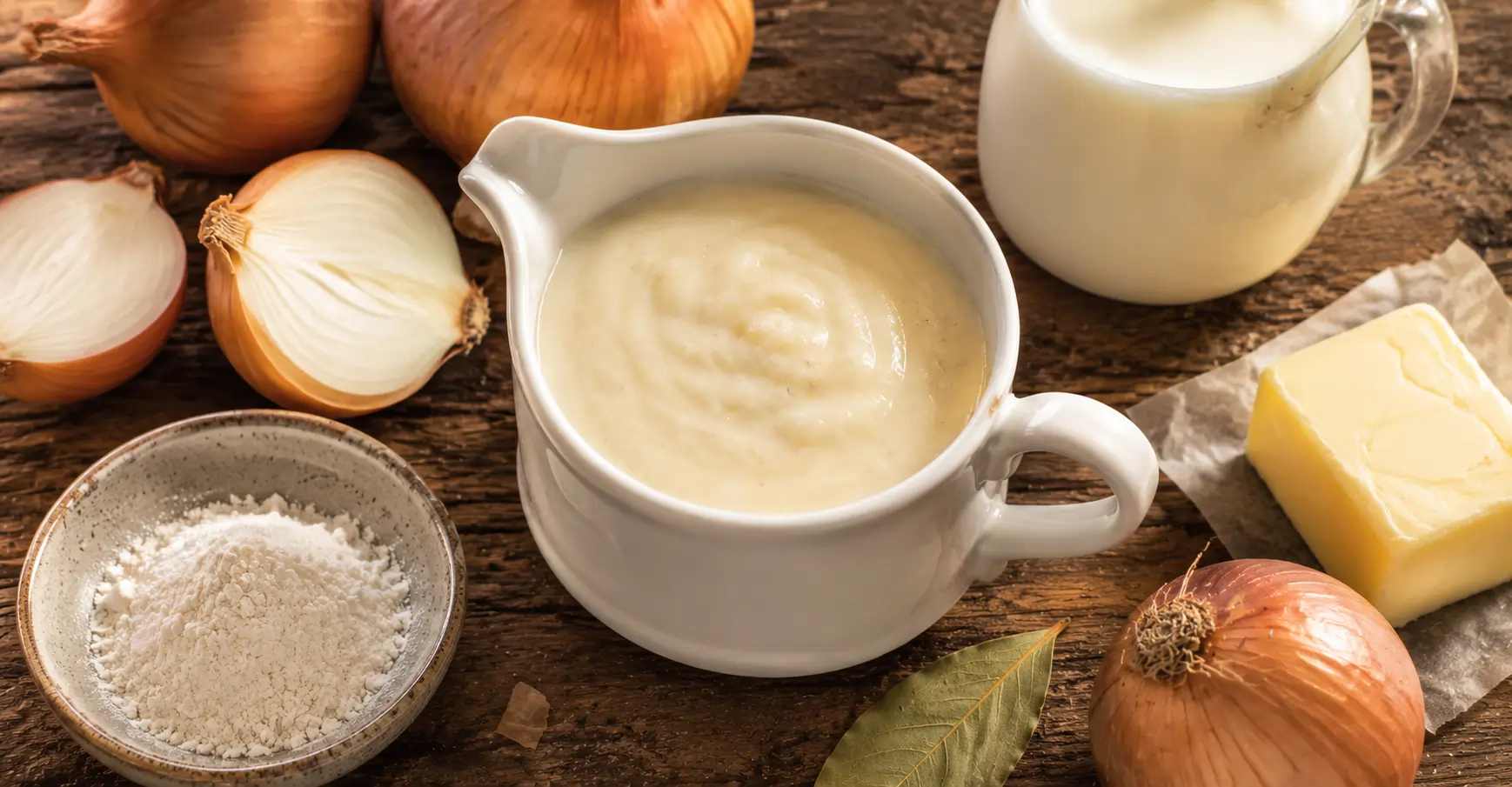
If you’ve ever had a proper British roast or a plate of bangers and mash with a rich, creamy onion sauce on top, you already know why this recipe is worth bookmarking. Mary Berry’s onion sauce is one of those quietly brilliant classics, simple, comforting, and somehow always tastes better than it has any right to, for how easy it is. I’ve made my fair share of onion sauces over the years, and this style is consistently the one I come back to.
What Is Mary Berry’s Onion Sauce?
Mary Berry’s onion sauce is a creamy white sauce made with slowly cooked onions, milk, butter, and flour, traditionally served alongside roast meats, sausages, or toad in the hole. It’s a classic British accompaniment, the kind of thing that shows up at Sunday dinners across the UK without much fanfare, but everyone secretly looks forward to.
What makes this version stand out, in my experience, is the patience involved. The onions get cooked low and slow until they’re soft and almost melt into the sauce, which gives it a sweetness that balances the richness of the butter and milk beautifully.
Ingredients for Mary Berry-Style Onion Sauce
Here’s what you’ll need to make this classic:
- 2 large onions, finely chopped
- 50g butter
- 40g plain flour
- 600ml milk
- 1 bay leaf
- Salt and white pepper to taste
- A pinch of ground nutmeg (optional, but adds a lovely warmth)
- 2 tablespoons double cream (optional, for extra richness)
This isn’t a recipe that requires anything fancy; it’s the kind of dish built from things you probably already have in the kitchen. The real “technique” here is mostly just time and a bit of attention.
How to Make Onion Sauce, Mary Berry Style
Step 1: Soften the Onions
Melt the butter in a saucepan over low heat, then add the chopped onions. Cook them gently for about 15-20 minutes, stirring occasionally, until they’re soft and translucent but not browned. This step is the foundation of the whole sauce, so don’t rush it; low and slow is the way to go here.
Step 2: Add the Flour
Sprinkle the flour over the softened onions and stir well to combine. This creates a roux that will thicken the sauce once the milk goes in. Cook for another minute or two, stirring constantly so the flour doesn’t catch or burn.
Step 3: Gradually Add the Milk
Slowly pour in the milk, a little at a time, whisking continuously to avoid lumps. Adding the milk gradually is the key here; pour it all in at once, and you’ll end up fighting lumps for the next ten minutes. Trust me, the slow approach is worth the extra patience.
Step 4: Simmer and Season
Add the bay leaf, then simmer the sauce gently for 10-15 minutes, stirring occasionally, until thickened. Season with salt, white pepper, and a small pinch of nutmeg if using. The sauce should coat the back of a spoon nicely once it’s ready.
Step 5: Finish with Cream (Optional)
Remove the bay leaf, then stir in the double cream if you’re using it. This step isn’t strictly necessary, but it does add a luxurious finish that takes the sauce from “nice” to “honestly, can I just eat this with a spoon?” territory. Taste and adjust the seasoning one last time before serving.
What to Serve Onion Sauce With
This sauce is a proper workhorse in British cooking. Here’s where it traditionally shines:
- Roast lamb is a classic pairing that’s hard to beat
- Sausages and mash comfort food at its finest
- Toad in the hole, the sauce soaks beautifully into the batter
- Liver and bacon, a traditional combo that benefits hugely from a rich sauce
- Boiled or roasted gammon, the sweetness of the onions pairs nicely with the saltiness of the meat
- Jacket potatoes an unexpected but genuinely tasty option
Store leftovers in an airtight container in the fridge for up to 3 days. Reheat gently on the stove, adding a splash of milk if it’s thickened too much in the fridge.
Why Slow-Cooked Onions Make All the Difference
Sweetness vs. Sharpness
Onions cooked quickly over high heat stay sharp and slightly bitter, while onions cooked slowly become sweet and almost jammy. That sweetness is what gives this sauce its depth. Without it, you’re really just left with a basic white sauce with chopped onion in it, which honestly isn’t the same thing at all.
Texture Considerations
Some people prefer a smoother sauce, while others (myself included, most of the time) like keeping the onion pieces visible for texture. If you want a smoother result, you can blend the sauce after cooking, though I’d argue you lose a bit of the rustic charm that makes this dish feel homemade in the first place.
Tips for Getting It Right
A few things worth keeping in mind:
- Don’t rush the onions. This is genuinely the most important step; give them the full 15-20 minutes.
- Add milk gradually. It feels slow, but it prevents lumps and saves you from a frustrating whisking session later.
- Use white pepper, not black. It keeps the sauce looking clean and pale, which feels more “proper” for this kind of dish.
- Adjust thickness as needed. If the sauce turns out too thick, a splash more milk fixes it right away.
- Make it ahead. This sauce reheats well, so it’s a great make-ahead option for a big Sunday roast.
Final Thoughts
This onion sauce is one of those recipes that proves simple ingredients, given enough time and attention, can produce something genuinely special. It’s creamy, comforting, and pairs with so many classic British dishes that it’s worth having in your regular rotation.
Give this recipe a go next time you’re making a roast dinner, and pay attention to how much the slow-cooked onions transform the final flavour. Once you taste the difference, plain gravy might start feeling a little boring by comparison.
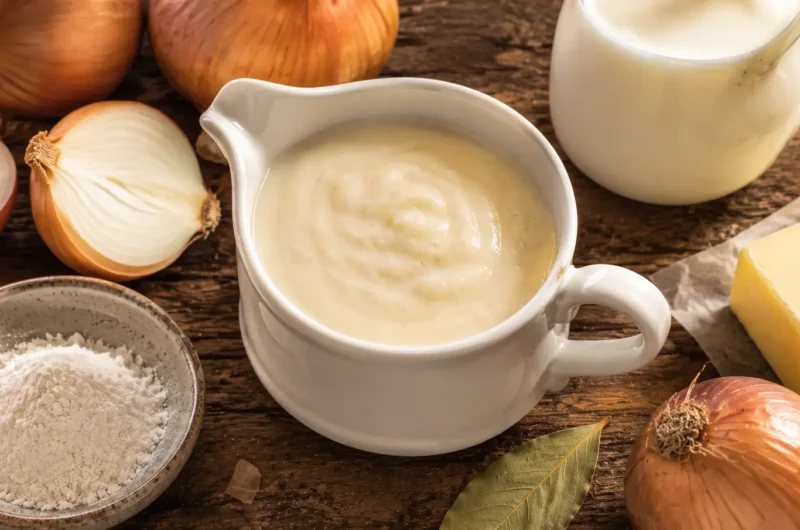
Mary Berry Onion Sauce Recipe
Course: Sauce Recipes4
servings30
minutes40
minutes300
kcalIngredients
2 large onions, finely chopped
50g butter
40g plain flour
600ml milk
1 bay leaf
Salt and white pepper to taste
A pinch of ground nutmeg (optional, but adds a lovely warmth)
2 tablespoons double cream (optional, for extra richness)
Directions
- Soften the Onions
Melt the butter in a saucepan over low heat, then add the chopped onions. Cook them gently for about 15-20 minutes, stirring occasionally, until they’re soft and translucent but not browned. - Add the Flour
Sprinkle the flour over the softened onions and stir well to combine. This creates a roux that will thicken the sauce once the milk goes in. Cook for another minute or two, stirring constantly so the flour doesn’t catch or burn. - Gradually Add the Milk
Slowly pour in the milk, a little at a time, whisking continuously to avoid lumps. Adding the milk gradually is the key here; pour it all in at once, and you’ll end up fighting lumps for the next ten minutes. - Simmer and Season
Add the bay leaf, then simmer the sauce gently for 10-15 minutes, stirring occasionally, until thickened. Season with salt, white pepper, and a small pinch of nutmeg if using. - Finish with Cream (Optional)
Remove the bay leaf, then stir in the double cream if you’re using it. This step isn’t strictly necessary, but it does add a luxurious finish that takes the sauce from “nice” to “honestly, can I just eat this with a spoon?” territory.