
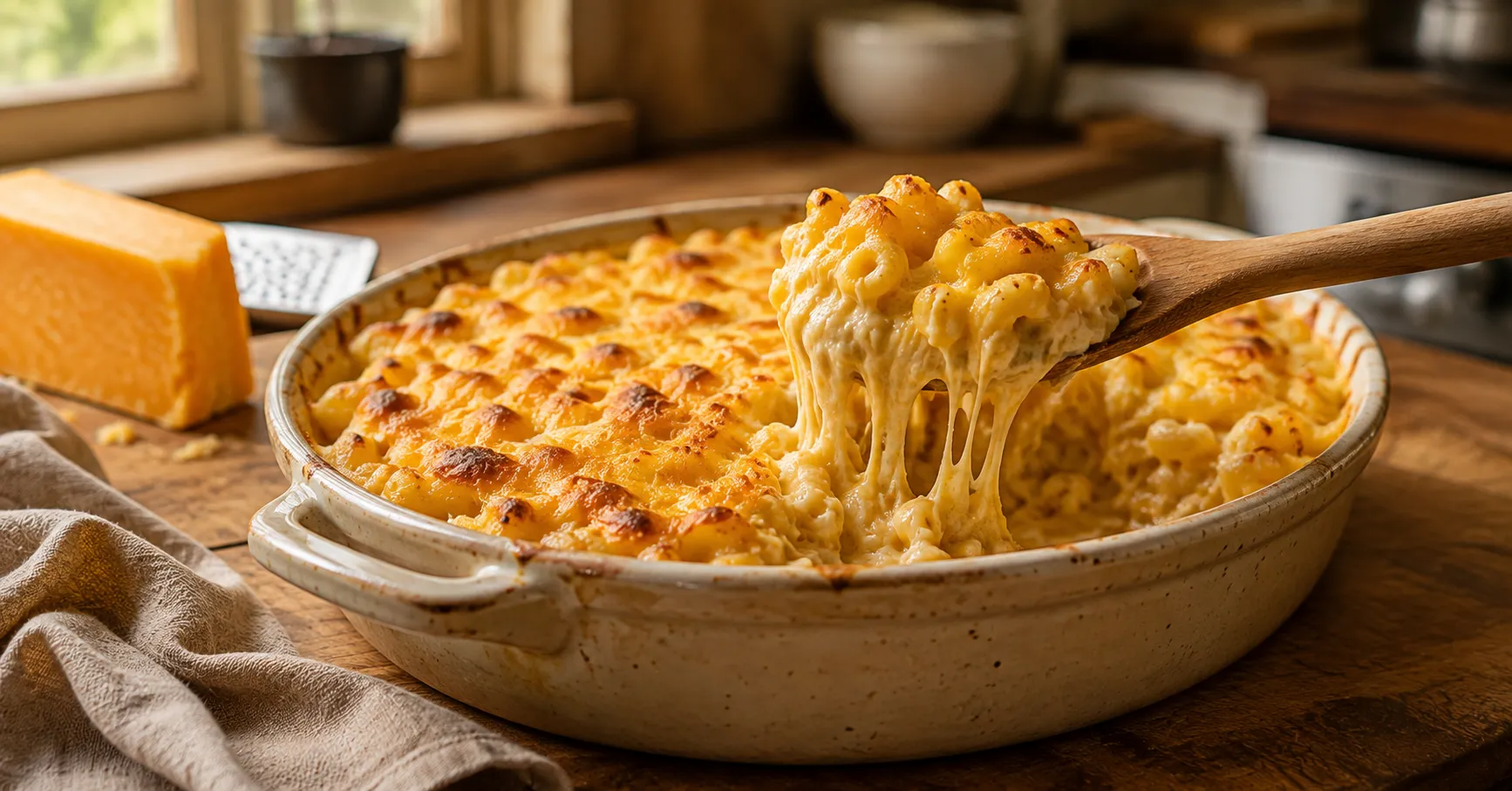
Few dishes bring people back to the dinner table faster than a bowl of warm, cheesy macaroni. Pioneer Woman’s mac and cheese recipe has become one of the most searched comfort food dishes online, and it’s easy to see why. It’s rich, creamy, a little tangy from dry mustard, and finishes with a golden, bubbly top if you choose to bake it.
If you’ve been looking for a reliable, from-scratch mac and cheese recipe original enough to become a family favorite, this guide breaks down the key elements that make this style so beloved, walks through a full stovetop and baked version inspired by it, and compares it to a few other well-known takes, including Jamie Oliver’s ultimate mac and cheese and Mary Berry’s macaroni cheese. By the end, you’ll have a version you can make confidently any night of the week.
What Makes Pioneer Woman’s Mac and Cheese Recipe Different
Unlike a basic boxed mix, this style of mac and cheese leans on a handful of specific techniques that set it apart from a simple cheese sauce. A beaten egg is typically whisked into the sauce, which adds richness and helps everything bind together into a smoother, creamier texture. A classic butter-and-flour roux forms the base, and whole milk is stirred in slowly to build a thick, velvety sauce. Dry mustard is another signature touch, adding a subtle tang that balances the richness of the cheese without making the dish taste sharp or spicy.
Sharp cheddar is the traditional cheese of choice, though many home cooks mix in Colby or a bit of Monterey Jack for extra meltiness. The pasta itself is usually cooked slightly firmer than normal, since it continues to soften once it’s combined with the hot sauce, and even more so if the dish goes into the oven afterward.
Pioneer Woman Mac and Cheese Bake: Stovetop and Oven Version
This recipe works two ways: served immediately as a creamy stovetop dish, or baked until the top turns golden and slightly crisp. Here’s a version that captures both options.
Ingredients
- 4 cups elbow macaroni, uncooked
- 4 tablespoons butter
- 1/4 cup all-purpose flour
- 2 1/2 cups whole milk
- 1 large egg, beaten
- 2 teaspoons dry mustard
- 1 pound sharp cheddar cheese, grated
- 1/2 teaspoon salt, plus more to taste
- 1/2 teaspoon black pepper
- Optional topping: 1/4 cup grated Parmesan, for baking
Instructions
- Bring a large pot of salted water to a boil. Cook the macaroni until just shy of al dente, since it will continue cooking in the sauce and in the oven if baking. Drain and set aside.
- In a large pot, melt the butter over medium-low heat. Sprinkle in the flour and whisk constantly for about 2 minutes to cook out the raw flour taste.
- Slowly pour in the milk, whisking the whole time to avoid lumps. Add the dry mustard and continue whisking until the mixture thickens, about 5 minutes.
- Spoon a small amount of the hot sauce into the beaten egg to temper it, whisking quickly so the egg doesn’t scramble. Then pour the tempered egg back into the pot, whisking constantly.
- Reduce the heat to low and stir in the grated cheddar a handful at a time, letting each addition melt before adding more. Season with salt and pepper.
- Add the drained macaroni to the sauce and stir until every piece is coated.
To serve stovetop: Spoon it directly into bowls while it’s hot and creamy.
To bake: Pour the mixture into a buttered baking dish, sprinkle with Parmesan, and bake at 350°F for 20 to 25 minutes, until bubbly and lightly golden on top.
Grandma Old Fashioned Mac and Cheese: How It Compares
A grandma old fashioned mac and cheese recipe typically shares a lot of DNA with this style, since both rely on a roux-based sauce rather than a jarred or processed cheese product. The main difference often comes down to simplicity. Old-fashioned family versions frequently skip the egg altogether and rely purely on the roux and cheese for thickness and richness. Seasoning also tends to be simpler, often just salt, pepper, and sometimes a pinch of paprika, rather than dry mustard.
If you grew up with a version passed down through your family, chances are it followed roughly the same formula: boil pasta, build a roux, melt in cheese, then either serve immediately or bake it with a breadcrumb or extra cheese topping. That shared structure is part of why so many regional and family variations of mac and cheese still taste comfortingly familiar, even when the exact seasonings differ.
Jamie Oliver’s Ultimate Mac and Cheese Recipe Ingredients
For a different take, Jamie Oliver’s ultimate mac and cheese leans into bolder, more complex flavor layering compared to a traditional American roux-based version. His approach commonly incorporates a blend of mature cheddar with additional cheeses for depth, along with aromatics like garlic, and sometimes a touch of mustard or Worcestershire sauce for extra savoriness. Fresh herbs and breadcrumbs are also common finishing touches for the baked version, adding texture contrast against the creamy interior.
Compared to the Pioneer Woman style, Jamie Oliver’s macaroni cheese recipe often emphasizes fresh, high-quality ingredients and a slightly more elevated presentation, while still keeping the process approachable for a home kitchen.
Mary Berry Macaroni Cheese Recipe: A British Classic
A Mary Berry macaroni cheese recipe reflects a classic British approach to the dish, generally built on a traditional béchamel sauce, butter, flour, and milk cooked together before cheese is stirred in. Mature cheddar is the typical cheese of choice, and a touch of mustard powder or English mustard is a common addition for depth. The dish is almost always finished in the oven, often topped with extra cheese or breadcrumbs for a golden, crisp crust.
This version tends to be a little lighter than heavily egg-enriched American styles, relying on the béchamel itself for creaminess rather than additional egg yolks. It’s a good option if you want something a bit more traditional and less rich.
Simple Mac and Cheese Recipe for Beginners
If all of this feels like more than you want to tackle on a weeknight, here’s a stripped-down, simple mac and cheese recipe that skips the egg and keeps things quick.
- Cook 3 cups of elbow macaroni according to package directions. Drain.
- In the same pot, melt 3 tablespoons of butter over medium heat and whisk in 3 tablespoons of flour. Cook for 1 to 2 minutes.
- Slowly whisk in 2 cups of milk and cook until thickened, about 4 to 5 minutes.
- Stir in 2 cups of shredded cheddar cheese until melted and smooth.
- Add the macaroni back in, stir to coat, and season with salt and pepper to taste.
This version is ready in about 20 minutes and is a solid entry point if you’re newer to making mac and cheese from scratch.
Tips for the Creamiest Results
A few small details make a big difference with any mac and cheese recipe:
- Grate your own cheese. Pre-shredded cheese contains anti-caking agents that can make the sauce grainy instead of smooth.
- Don’t overcook the pasta before mixing. Slightly underdone macaroni holds up better once combined with the hot sauce, especially if baking afterward.
- Add cheese gradually. Melting cheese in batches, rather than all at once, helps keep the sauce smooth rather than clumpy.
- Taste before baking. Cheese sauces mellow slightly once baked, so season a touch more assertively than you think you need.
Frequently Asked Questions
Why does this recipe use an egg? The beaten egg helps thicken and enrich the cheese sauce, giving it a smoother, creamier texture than a roux-based sauce alone. It’s a common technique in richer, baked mac and cheese recipes.
Can I make this ahead of time? Yes. Assemble the dish up to the baking step, cover, and refrigerate for up to a day. Add an extra 5 to 10 minutes to the baking time if going in cold from the fridge.
What’s the best cheese for mac and cheese? Sharp cheddar is the most common choice for flavor, but a blend of cheddar with Colby, Monterey Jack, or Gruyère can add extra meltiness and depth.
How do I keep the sauce from getting grainy? Grate cheese fresh rather than using pre-shredded bags, keep the heat low when melting it in, and add it gradually rather than all at once.
Can I freeze leftover mac and cheese? It can be frozen, though the texture may become slightly grainy after thawing due to the dairy content. Reheat gently with a splash of milk to help restore creaminess.
Final Thoughts
Whether you’re recreating a Pioneer Woman-style mac and cheese bake, trying a simpler stovetop version, or comparing it to Jamie Oliver’s or Mary Berry’s takes on the classic, one thing holds across every version: a good roux, quality cheese, and a little patience go a long way. This dish rewards care without demanding much time.
Give this recipe a try this week, whether you serve it creamy straight off the stove or baked with a golden top, and see which version becomes your new go-to. Once you find your favorite ratio of cheese to sauce, you’ll likely be making this one on repeat.
Pioneer Woman’s Mac and Cheese Recipe: The Creamy Comfort Food Classic
Course: Side Dishes4
servings30
minutes40
minutes300
kcalIngredients
4 cups elbow macaroni, uncooked
4 tablespoons butter
1/4 cup all-purpose flour
2 1/2 cups whole milk
1 large egg, beaten
2 teaspoons dry mustard
1 pound sharp cheddar cheese, grated
1/2 teaspoon salt, plus more to taste
1/2 teaspoon black pepper
Optional topping: 1/4 cup grated Parmesan, for baking
Directions
- Bring a large pot of salted water to a boil. Cook the macaroni until just shy of al dente, since it will continue cooking in the sauce and in the oven if baking. Drain and set aside.
- In a large pot, melt the butter over medium-low heat. Sprinkle in the flour and whisk constantly for about 2 minutes to cook out the raw flour taste.
- Slowly pour in the milk, whisking the whole time to avoid lumps. Add the dry mustard and continue whisking until the mixture thickens, about 5 minutes.
- Spoon a small amount of the hot sauce into the beaten egg to temper it, whisking quickly so the egg doesn’t scramble. Then pour the tempered egg back into the pot, whisking constantly.
- Reduce the heat to low and stir in the grated cheddar a handful at a time, letting each addition melt before adding more. Season with salt and pepper.
- Add the drained macaroni to the sauce and stir until every piece is coated.