
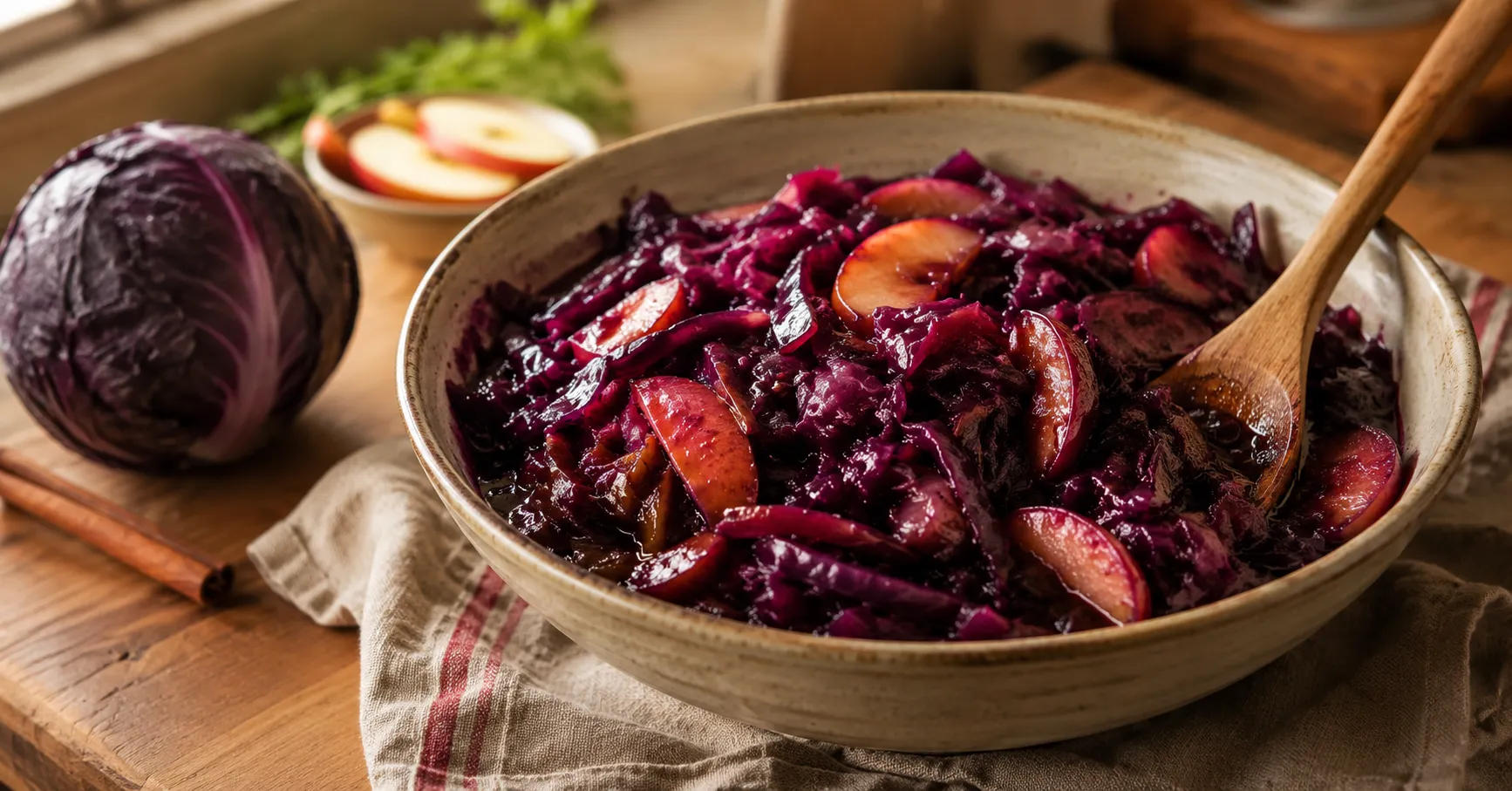
There’s a reason braised red cabbage shows up on so many British dinner tables, especially around Christmas and Sunday roasts. It’s sweet, slightly tangy, deep purple in color, and manages to be both comforting and refreshing next to rich meats like pork, gammon, or roast turkey. A Hairy Bikers red cabbage recipe is one of the most searched versions of this dish, known for being straightforward, generously spiced, and reliably delicious, requiring minimal hands-on effort.
If you’ve been hunting for an easy, no-fuss way to make braised red cabbage from scratch, this guide has you covered. We’ll walk through a full recipe inspired by the classic Hairy Bikers approach, compare it to other well-loved versions like Mary Berry’s and Jamie Oliver’s takes, and cover storage tips, common mistakes, and answers to the questions people ask most. By the end, you’ll have a dependable red cabbage side dish ready for your next roast dinner or holiday table.
What Makes This Red Cabbage Recipe So Popular
Braised red cabbage in this style typically combines shredded red cabbage with apple, onion, a splash of vinegar, a bit of sugar, and warming spices like cinnamon or nutmeg, then slowly cooked until soft and glossy. The slow cooking process is key. As the cabbage softens, it soaks up the sweetness from the apple and sugar and the sharpness from the vinegar, developing a rich, balanced flavor that pairs beautifully with fatty or savory main dishes.
Part of the appeal is how forgiving the method is. You don’t need precision, just time. Whether simmered gently on the stovetop or slow-cooked in the oven, the dish practically takes care of itself once it’s assembled, which is exactly why it has become such a popular Hairy Biker’s red cabbage recipe BBC Good Food style favorite among home cooks looking for a reliable, low-maintenance side.
Hairy Bikers’ Red Cabbage Recipe Easy Version
Here’s a straightforward, easy-to-follow version that captures the classic sweet and tangy flavor this dish is known for.
Ingredients
- 1 medium red cabbage (about 1kg), cored and finely shredded
- 1 large onion, thinly sliced
- 2 apples, peeled, cored, and sliced
- 25g butter
- 3 tablespoons light brown sugar
- 3 tablespoons red wine vinegar or cider vinegar
- 1 cinnamon stick (or 1/2 teaspoon ground cinnamon)
- 1/4 teaspoon ground nutmeg
- 150ml water or apple cider
- Salt and black pepper to taste
Instructions
- Melt the butter in a large, heavy-bottomed pot or ovenproof casserole dish over medium heat. Add the sliced onion and cook for 3 to 4 minutes until softened.
- Add the shredded cabbage and sliced apples to the pot, stirring to combine with the onions.
- Sprinkle in the sugar, cinnamon, and nutmeg, then pour in the vinegar and water.
- Season with a pinch of salt and pepper, then stir everything together well.
- Cover with a lid and cook on low heat for 1 to 1.5 hours, stirring occasionally, until the cabbage is tender and the liquid has reduced into a glossy glaze. Alternatively, transfer to a covered casserole dish and cook in the oven at 150°C (130°C fan) for around 2 hours.
- Taste and adjust the seasoning, adding a touch more sugar or vinegar depending on your preference for sweet versus tangy.
This dish tastes even better the next day, once the flavors have had time to settle, which makes it an excellent make-ahead side for busy holiday cooking.
Traditional Red Cabbage Recipe: The Classic Method
A traditional red cabbage recipe follows much the same formula but leans on fewer, simpler ingredients. Historically, this dish was a way to use up cabbage from the autumn harvest, slow-cooked with whatever apples, vinegar, and sugar were on hand to preserve it a little longer and add flavor through the colder months.
The traditional method typically skips extra flourishes like port or citrus, focusing instead on the core combination of cabbage, apple, onion, vinegar, and warming spice. Long, slow cooking is essential here, since it’s what breaks down the cabbage’s natural toughness and allows the sweet and sour flavors to fully develop. Many traditional red cabbage recipe BBC Good Food-style versions stick closely to this simple base, which is part of why the dish has remained a fixture on British tables for generations.
Simple Red Cabbage Recipe for a Quick Side Dish
If you’re short on time, here’s a simple red cabbage recipe that trims the cooking time down considerably while still delivering that familiar sweet-tangy flavor.
- Thinly slice half a red cabbage and one apple.
- Heat a tablespoon of butter in a large frying pan over medium heat, then add the cabbage and apple.
- Stir in 2 tablespoons of sugar, 2 tablespoons of vinegar, and a pinch of ground cinnamon.
- Add a splash of water, cover, and cook for 20 to 25 minutes, stirring occasionally, until tender.
This quicker stovetop method won’t develop quite as deep a flavor as a long, slow braise, but it’s a solid option when you want a similar result without setting aside a couple of hours.
Mary Berry Red Cabbage Recipe: A Slightly Different Approach
A Mary Berry red cabbage recipe often introduces a bit more citrus brightness, sometimes incorporating orange juice or zest alongside the traditional apple and vinegar base. This adds a slightly different dimension to the sweetness, making the finished dish taste a touch fresher and less purely sugar-forward.
Like most classic British versions, the method still relies on slow cooking to soften the cabbage and marry the flavors together, whether that’s on the hob or in a low oven. The overall structure is very similar to the Hairy Bikers’ approach: cabbage, apple, onion, sugar, vinegar, and spice, but the citrus note is a signature touch that sets this version apart.
Jamie Oliver Red Cabbage Recipe: A Bolder Twist
A Jamie Oliver red cabbage recipe frequently leans into bolder, more assertive flavors, sometimes incorporating red wine, balsamic vinegar, or star anise for a deeper, more complex profile than the classic apple-and-vinegar base. Fresh herbs like bay leaves are also common additions, simmered in with the cabbage to infuse extra depth throughout the cooking process.
This style tends to feel a little more restaurant-inspired, with a richer, more layered flavor that pairs particularly well with heartier winter mains like roast duck or venison. It’s a good option if you want to elevate the classic dish for a special occasion table.
Best Ever Red Cabbage Recipe: Tips for Getting It Right
If you’re after what many consider the best-ever red cabbage recipe results, a few small techniques make a noticeable difference:
- Shred the cabbage finely and evenly. This helps it cook at a consistent rate and absorb the vinegar and spices more thoroughly.
- Don’t rush the cooking time. Red cabbage needs time to break down and soften properly; rushing it on high heat can leave it tough and underseasoned.
- Balance sweet and sour carefully. Taste as you go, and adjust the sugar or vinegar in small increments rather than all at once.
- Make it a day ahead. The flavor deepens significantly overnight, making this one of the few side dishes that genuinely improve with a rest.
- Add a splash of liquid if it looks dry. If the cabbage starts sticking or drying out before it’s tender, add a little extra water, cider, or stock.
Frequently Asked Questions
Can I make red cabbage ahead of time? Yes. Braised red cabbage keeps well in the refrigerator for up to 4 days and often tastes better the next day once the flavors have settled. Reheat gently on the stovetop with a splash of water if needed.
Can I freeze braised red cabbage? Yes, cooked red cabbage freezes well for up to 3 months. Thaw it in the refrigerator overnight and reheat gently on the stovetop, adding a little extra liquid if it seems dry.
What can I serve with red cabbage? Braised red cabbage is a classic pairing with roast pork, gammon, sausages, and turkey. It’s especially popular alongside festive meals and Sunday roasts.
Why is my red cabbage tough? Tough red cabbage is usually a sign that it hasn’t cooked long enough. This dish relies on slow, gentle cooking to break down the cabbage’s fibers, so resist the urge to rush it on high heat.
Do I need to peel the apples? Peeling is optional. Leaving the skin on adds a bit more texture and color, though peeling gives a smoother, softer finished dish if you prefer that texture.
Final Thoughts
A good braised red cabbage recipe, whether you follow the classic Hairy Bikers style, add Mary Berry’s citrus twist, or go bolder with Jamie Oliver’s approach, is one of those dishes that rewards patience with very little actual effort. Once it’s in the pot, it largely looks after itself, leaving you free to focus on the rest of your meal.
Give this recipe a try ahead of your next roast dinner or holiday gathering, and consider making a double batch. Between how well it keeps and how much better it tastes the next day, you’ll likely find yourself reaching for it again before the week is out.
Hairy Bikers Red Cabbage Recipe: The Easy, Sweet, and Tangy Classic
Course: Side Dishes4
servings30
minutes40
minutes300
kcalIngredients
1 medium red cabbage (about 1kg), cored and finely shredded
1 large onion, thinly sliced
2 apples, peeled, cored, and sliced
25g butter
3 tablespoons light brown sugar
3 tablespoons red wine vinegar or cider vinegar
1 cinnamon stick (or 1/2 teaspoon ground cinnamon)
1/4 teaspoon ground nutmeg
150ml water or apple cider
Salt and black pepper to taste
Directions
- Melt the butter in a large, heavy-bottomed pot or ovenproof casserole dish over medium heat. Add the sliced onion and cook for 3 to 4 minutes until softened.
- Add the shredded cabbage and sliced apples to the pot, stirring to combine with the onions.
- Sprinkle in the sugar, cinnamon, and nutmeg, then pour in the vinegar and water.
- Season with a pinch of salt and pepper, then stir everything together well
- Cover with a lid and cook on low heat for 1 to 1.5 hours, stirring occasionally, until the cabbage is tender and the liquid has reduced into a glossy glaze. Alternatively, transfer to a covered casserole dish and cook in the oven at 150°C (130°C fan) for around 2 hours.
- Taste and adjust the seasoning, adding a touch more sugar or vinegar depending on your preference for sweet versus tangy.