
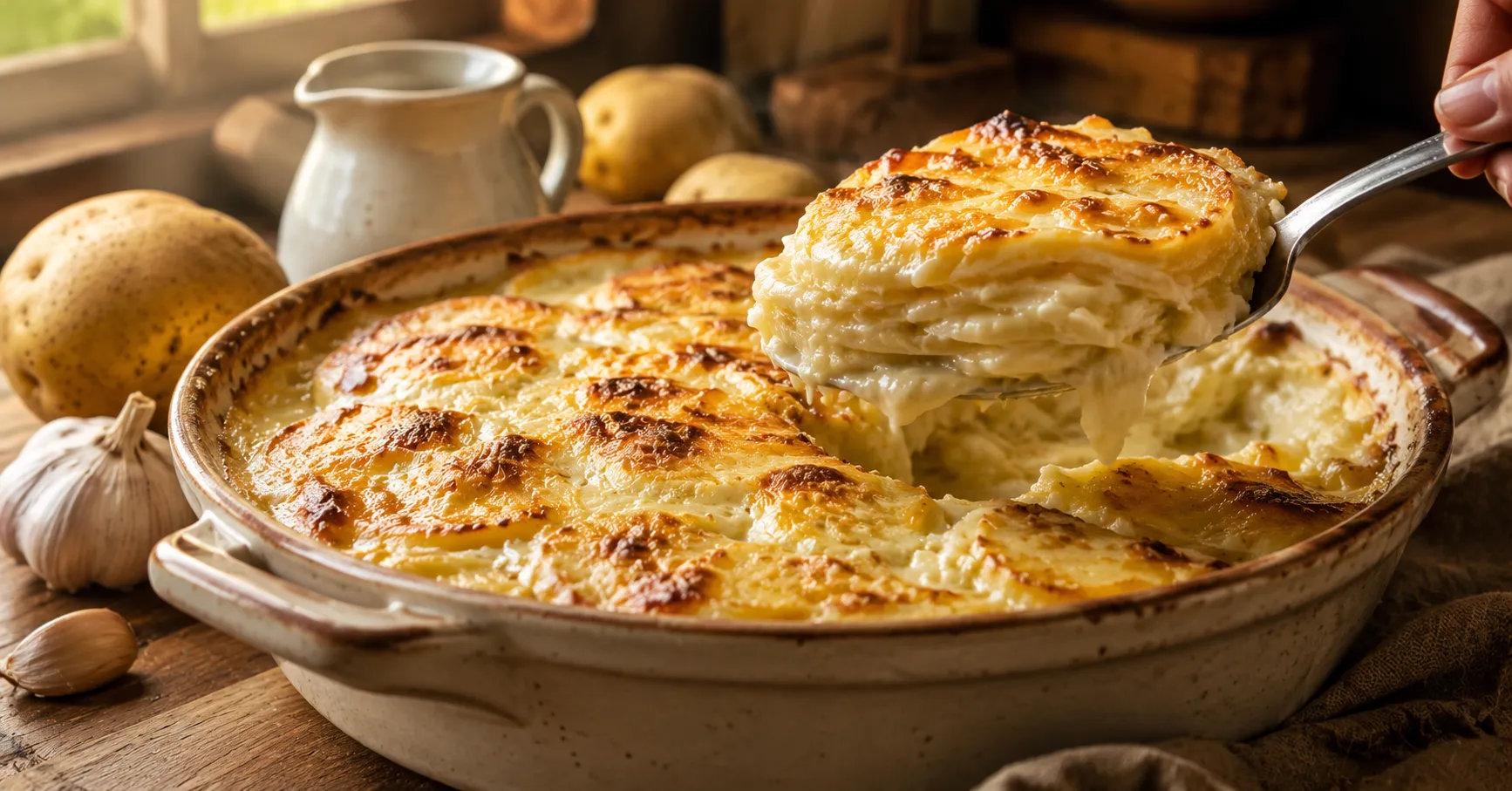
Few side dishes feel as indulgent as a proper dauphinoise. Thin layers of potato, submerged in cream and garlic, are baked slowly until the top turns golden and the inside goes soft and silky. A Hairy Bikers dauphinoise potatoes recipe is one of the most searched versions of this French classic, largely because it strips the dish back to its essentials: good potatoes, rich cream, garlic, and time in the oven.
If you’ve been wanting to make this at home but assumed it required complicated technique or a long ingredient list, this guide will change your mind. We’ll walk through a full, easy recipe inspired by the classic Hairy Bikers approach, cover common mistakes that lead to a split or greasy sauce, and compare it to how other well-known cooks like Nigella Lawson, Jamie Oliver, Mary Berry, Delia Smith, and James Martin approach the same dish. By the end, you’ll have a version worth adding to your regular roast dinner rotation.
What Makes This Dauphinoise Potatoes Recipe So Popular
At its core, dauphinoise potatoes come from the Dauphiné region of France, and the traditional dish is built on just a few ingredients: thinly sliced potatoes, cream, garlic, and seasoning, layered and baked until tender. What sets a Hairy Bikers-style version apart is a focus on getting the fundamentals exactly right rather than adding extra flourishes like cheese or breadcrumbs.
This style typically favors floury potatoes, which absorb the cream mixture beautifully and turn soft without breaking apart. A combination of double cream and whole milk is common, which helps prevent the heavy, overly rich result you sometimes get from cream alone. Garlic, a touch of nutmeg, and fresh thyme round out the flavor without overwhelming the potato itself. The result is a dish where the potato and cream genuinely do most of the talking, rather than competing with a long list of add-ins.
Hairy Bikers Dauphinoise Potatoes Recipe with Cream
This version captures the classic approach: simple ingredients, a gentle pre-cook in the cream mixture, and a slow bake for a stable, silky sauce.
Ingredients
- 1kg floury potatoes (such as Maris Piper or King Edward), peeled and sliced about 3mm thick
- 300ml double cream
- 200ml whole milk
- 2 garlic cloves, crushed
- 1/4 teaspoon ground nutmeg
- A few sprigs of fresh thyme
- Salt and black pepper to taste
- Butter, for greasing the dish
Instructions
- Preheat the oven to 160°C (140°C fan). Generously butter a large baking dish.
- In a wide saucepan, combine the cream, milk, crushed garlic, nutmeg, and thyme. Warm gently over low to medium heat, stirring occasionally. Avoid letting it boil, since high heat can cause the sauce to split.
- Add the sliced potatoes to the warm cream mixture and simmer gently for 5 to 6 minutes, stirring carefully so the slices cook evenly. This step helps the potatoes cook through more evenly once baked.
- Season with salt and pepper, then remove the thyme sprigs.
- Transfer the potato and cream mixture into the prepared baking dish, arranging the slices in even, slightly overlapping layers.
- Bake for 45 to 60 minutes, until the top is golden and bubbling and a knife slides easily through the potatoes.
- Let the dish rest for 5 to 10 minutes before serving, which helps the sauce set slightly and makes it easier to portion.
Hairy Bikers Dauphinoise Potatoes Recipe Easy Version
For a quicker take that skips the pre-cooking step, this method works well when you’re short on time but still want that classic creamy result.
- Preheat the oven to 180°C (160°C fan) and butter a baking dish.
- Layer thinly sliced potatoes directly into the dish, seasoning lightly between each layer.
- Pour over a mixture of 300ml cream, 100ml milk, and 2 crushed garlic cloves, making sure the liquid reaches most of the way up the potatoes.
- Cover with foil and bake for 35 minutes, then remove the foil and bake for another 20 to 25 minutes until golden on top.
This easy version takes a little less hands-on effort, though pre-cooking the potatoes in the cream mixture (as in the classic method above) tends to give a more evenly cooked result with less risk of raw layers in the center.
Common Mistakes: Why Dauphinoise Can Split or Turn Greasy
One of the most common frustrations with this dish is ending up with a sauce that separates into an oily, grainy mess instead of staying smooth. A few culprits are usually to blame. Boiling the cream too aggressively is the biggest one, since high heat can cause the fat to separate from the liquid. Keeping the heat low and gentle throughout is essential.
Using a very low-fat milk instead of whole milk can also destabilize the sauce, since there isn’t enough fat content to keep everything emulsified. If splitting has been a recurring issue, whisking a teaspoon of flour into the cream mixture before adding the potatoes can help stabilize the sauce and prevent it from breaking during baking.
How This Compares: Nigella, Jamie Oliver, Mary Berry, Delia Smith, and James Martin
Since dauphinoise potatoes are such a beloved dish, it’s worth knowing how other well-known cooks approach it.
Potato Dauphinoise Nigella
A potato dauphinoise Nigella-style version tends to lean into a generously rich, indulgent result, often using a higher proportion of cream to milk for an especially luxurious texture. Garlic and a touch of nutmeg remain central, with the focus firmly on maximizing richness rather than lightening the dish in any way.
Jamie Oliver Dauphinoise Potatoes
A Jamie Oliver dauphinoise potatoes recipe often introduces a bit more texture and flavor complexity, sometimes incorporating grated cheese like Gruyère into the layers or finishing the dish with fresh herbs. This approach tends to feel slightly more rustic and layered in flavor compared to the pared-back Hairy Bikers method.
Mary Berry Dauphinoise Potatoes
A Mary Berry dauphinoise potatoes recipe typically emphasizes precision and consistency, with clear attention to slicing potatoes evenly and building the layers carefully for a neat, uniform bake. Her approach often includes a modest amount of grated cheese on top for a light golden crust, striking a balance between indulgent and approachable.
Dauphinoise Potatoes Delia Smith
A Dauphinoise potatoes Delia Smith version tends to stay close to the traditional French method, prioritizing technique and proper layering over shortcuts. Her approach generally favors classic seasoning, garlic, cream, and nutmeg, without straying far from the dish’s French roots.
James Martin Dauphinoise Potatoes
A James Martin dauphinoise potatoes recipe often brings a slightly more restaurant-style technique to the dish, sometimes incorporating a two-stage cooking process for extra control over texture, similar in spirit to the pre-cooking step used in the classic Hairy Bikers method. This approach tends to prioritize achieving that perfect balance between a crisp top and a meltingly soft interior.
Frequently Asked Questions
Which potatoes are best for dauphinoise potatoes? Floury potatoes like Maris Piper or King Edward are best, as they absorb the cream well and hold their shape without turning mushy. Waxy varieties like Charlotte also work and give a slightly firmer bite.
Can I make dauphinoise potatoes ahead of time? Yes. You can assemble the dish completely, let it cool, and refrigerate it overnight before baking. This makes it a convenient make-ahead side for busy roast dinners or holiday meals.
Why did my dauphinoise potatoes turn out greasy? This usually happens when the cream is boiled too aggressively or when low-fat milk is used instead of whole milk. Keeping the heat gentle and using full-fat dairy helps the sauce stay smooth and stable.
Can I freeze dauphinoise potatoes? Freezing isn’t generally recommended, since the potatoes can become grainy in texture once thawed. It’s best enjoyed fresh or reheated from the refrigerator within a few days.
What should I serve with dauphinoise potatoes? This dish pairs well with roast meats like chicken, lamb, or beef, and also works nicely alongside grilled vegetables or a simple green salad to balance out the richness.
Final Thoughts
A great dauphinoise potatoes recipe doesn’t need to be complicated to be impressive. Whether you follow the classic Hairy Bikers method, lean into Nigella’s extra-rich approach, or try Mary Berry’s neatly layered version, the fundamentals stay the same: good potatoes, quality cream, and a bit of patience in the oven.
Give this recipe a try for your next Sunday roast or holiday table, and don’t be surprised if it becomes the dish everyone asks for by name. Once you’ve nailed the technique, you’ll likely find yourself making it again and again.
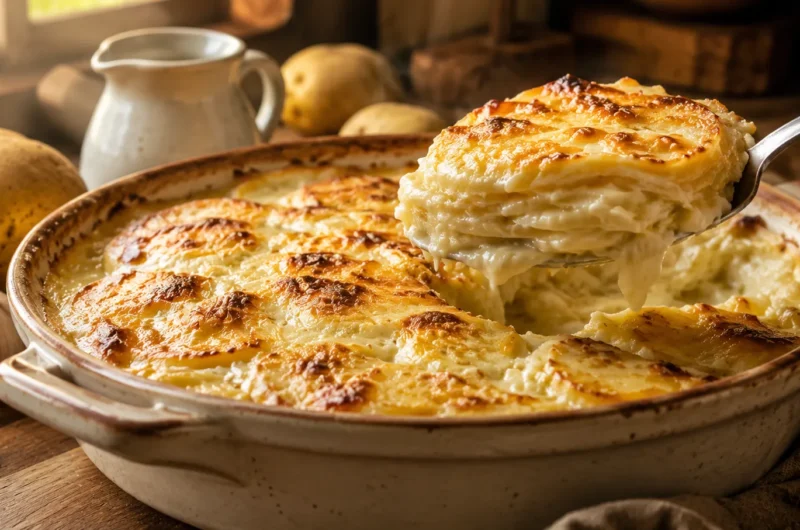
Hairy Bikers Dauphinoise Potatoes Recipe: Creamy, Comforting, and Easier Than You Think
Course: Side Dishes4
servings30
minutes40
minutes300
kcalIngredients
1kg floury potatoes (such as Maris Piper or King Edward), peeled and sliced about 3mm thick
300ml double cream
200ml whole milk
2 garlic cloves, crushed
1/4 teaspoon ground nutmeg
A few sprigs of fresh thyme
Salt and black pepper to taste
Butter, for greasing the dish
Directions
- Preheat the oven to 160°C (140°C fan). Generously butter a large baking dish.
- In a wide saucepan, combine the cream, milk, crushed garlic, nutmeg, and thyme. Warm gently over low to medium heat, stirring occasionally. Avoid letting it boil, since high heat can cause the sauce to split.
- Add the sliced potatoes to the warm cream mixture and simmer gently for 5 to 6 minutes, stirring carefully so the slices cook evenly. This step helps the potatoes cook through more evenly once baked.
- Season with salt and pepper, then remove the thyme sprigs.
- Transfer the potato and cream mixture into the prepared baking dish, arranging the slices in even, slightly overlapping layers.
- Bake for 45 to 60 minutes, until the top is golden and bubbling and a knife slides easily through the potatoes.
- Let the dish rest for 5 to 10 minutes before serving, which helps the sauce set slightly and makes it easier to portion.