
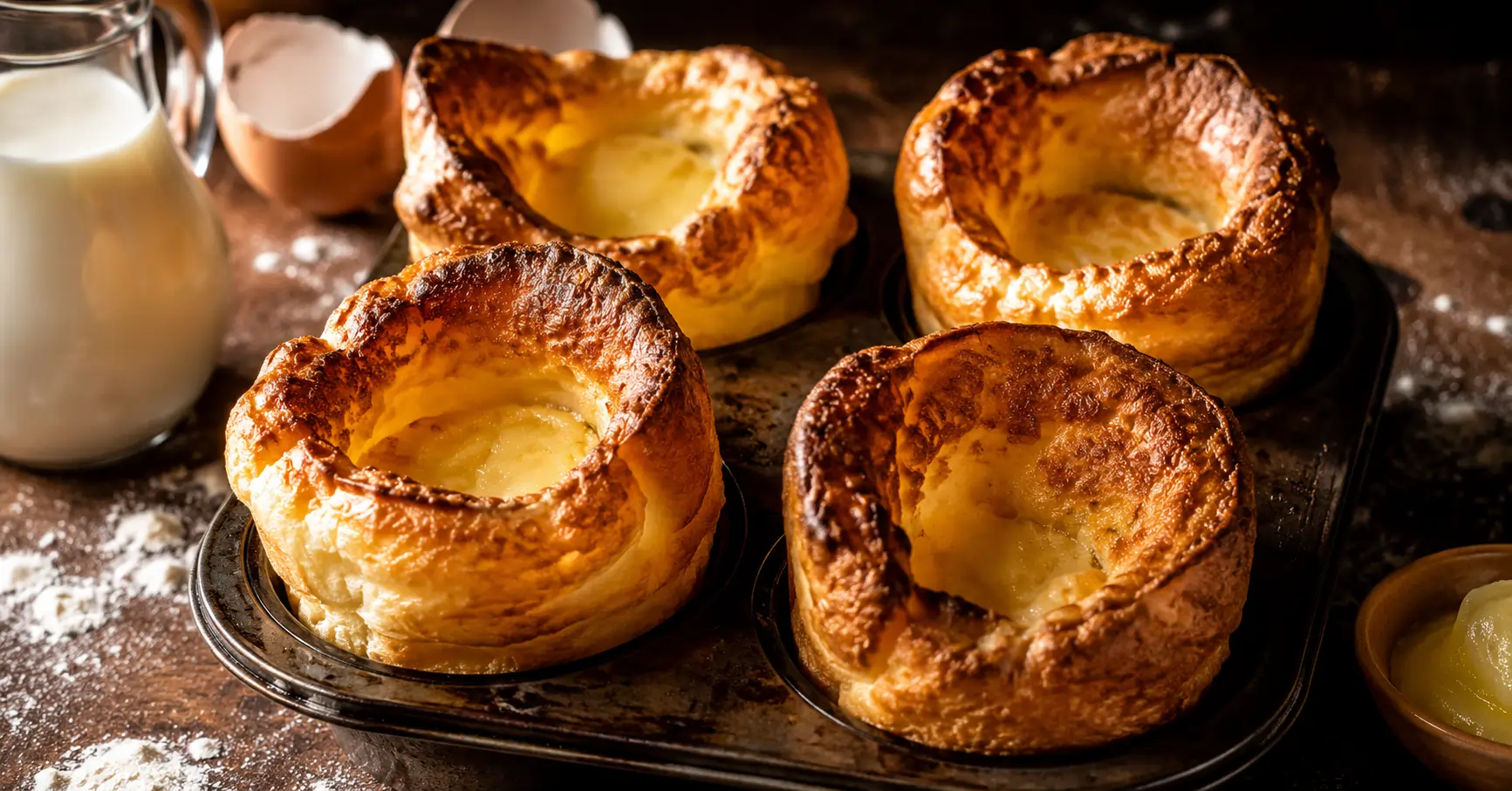
Yorkshire puddings are one of those dishes that look deceptively simple but have humbled home cooks for generations, flat, dense, sad little discs that bear zero resemblance to the towering, golden, crispy-edged beauties you get at a proper Sunday roast. Gordon Ramsay’s approach fixes all of that. I followed his method for the first time a couple of years ago and genuinely couldn’t believe the difference a few technique tweaks made.
What Makes Gordon Ramsay’s Yorkshire Pudding Recipe Special?
Gordon Ramsay’s Yorkshire pudding recipe produces tall, dramatically risen puddings with crispy golden edges and a soft, custardy center by focusing on three non-negotiable elements: equal-ratio batter, rested batter, and smoking-hot fat. These aren’t complicated techniques; they’re just the details most recipes gloss over, which is exactly why so many homemade Yorkshire puddings fall flat (sometimes literally).
Ramsay is famously particular about Yorkshire puddings, and honestly, that’s warranted. They’re one of the most iconic British dishes, and getting them right is genuinely satisfying in a way that feels disproportionate to how few ingredients are involved.
Ingredients for Gordon Ramsay-Style Yorkshire Puddings
Here’s everything you need, and notice how simple the list is:
- 140g plain flour
- 4 large eggs
- 200ml whole milk
- Pinch of salt
- Sunflower oil or beef dripping (for the tin, this choice matters more than people think)
That’s it. Five ingredients, one bowl, and a very hot oven. The magic here isn’t in exotic additions; it’s entirely in the technique. FYI, equal weights of flour, eggs, and milk is the ratio Ramsay champions, and it’s the same ratio professional kitchens use for a reason.
How to Make Gordon Ramsay’s Yorkshire Puddings
Step 1: Make the Batter and Let It Rest
Combine the flour and salt in a large bowl, make a well in the center, and crack in the eggs. Whisk from the center outward, gradually incorporating the flour, then slowly add the milk while continuing to whisk until you have a completely smooth, lump-free batter. The batter should look like thin, pourable cream and light.
Cover and rest the batter for at least 30 minutes at room temperature, ideally 1 hour. This step is non-negotiable. Resting allows the gluten to relax and the starch granules to fully hydrate, which produces a lighter, more dramatically risen pudding. Skip it, and your puddings will still taste fine, but they won’t reach anywhere near the same height. I learned this the hard way on my first attempt.
Step 2: Heat the Tin and Fat Until Smoking
Preheat the oven to 230°C (450°F) and add a small amount of oil or beef dripping to each cup of a 12-hole muffin tin. Place the tin in the oven for at least 10-15 minutes until the fat is literally smoking. This is the most critical step in the entire recipe.
The fat must be smoking hot before the batter goes in. Cold or even warm fat produces flat puddings. The initial blast of heat from the smoking fat is what creates the rapid steam that puffs the batter up dramatically in the first few minutes of baking.
Step 3: Add the Batter Quickly
Remove the tin from the oven, work fast, and pour the batter into each cup until about one-third full. Speed matters here; every second the tin sits outside the oven, the fat loses temperature. Pour confidently, don’t dither, and get it back in the oven immediately.
You’ll hear a satisfying sizzle as the batter hits the hot fat. That sound means you did it right.
Step 4: Bake Without Opening the Oven Door
Bake at 230°C for 20-25 minutes until the puddings are tall, deeply golden, and crispy on the edges. Here’s the rule Ramsay is strict about: do not open the oven door during baking. Not even to peek. The sudden drop in temperature collapses the puddings before they’ve set, and no amount of additional baking time will fix that.
Set a timer, walk away, and trust the process.
What to Serve with Yorkshire Puddings
Yorkshire puddings shine brightest as part of a traditional British Sunday roast, but they’re versatile enough to go beyond that:
- Roast beef and gravy, the undisputed classic pairing
- Roast lamb or pork works just as beautifully
- Toad in the hole cook sausages inside a larger Yorkshire pudding batter for a full meal
- Yorkshire pudding wraps a Northern English street food trend worth trying
- Filled with soup, use large puddings as edible bowls for a fun starter
- Dessert puddings filled with jam, cream, or ice cream for a sweet version
Why Most Homemade Yorkshire Puddings Fail
The Fat Isn’t Hot Enough
This is the single most common mistake, and it accounts for probably 80% of flat Yorkshire pudding disasters. Warm fat doesn’t create the rapid steam reaction needed to puff the batter. If the fat isn’t visibly smoking when the batter goes in, the puddings will spread sideways instead of rising upward.
The Batter Wasn’t Rested
Unrested batter produces puddings that rise unevenly and often collapse quickly after coming out of the oven. A rested batter bakes more consistently and holds its structure significantly better than those extra 30-60 minutes genuinely make a visible difference in the final height.
Tips for Perfect Results Every Time
A few things I’ve picked up through plenty of Sunday roast practice:
- Use a metal muffin tin, not silicone. Metal conducts heat far better and gets the fat hotter faster.
- Beef dripping over sunflower oil. IMO, beef dripping produces a richer flavor and slightly crispier edges worth sourcing if you can find it.
- Pour the batter from a jug. It’s faster and more accurate than using a ladle, which matters when speed is everything.
- Don’t overfill the cups. One-third full is the target; too much batter and the puddings spread instead of rising.
- Serve immediately. Yorkshire puddings start deflating within minutes of leaving the oven, so have everything else ready to go before you pull them out.
Final Thoughts
Gordon Ramsay’s Yorkshire pudding recipe works because it doesn’t try to reinvent the wheel; it just executes the fundamentals perfectly. Hot fat, rested batter, high heat, and a hands-off oven. Master those four things, and you’ll turn out restaurant-quality Yorkshire puddings every single Sunday.
Try this recipe at your next roast dinner, follow the technique faithfully, and prepare for the compliments. And if someone asks your secret, just tell them you had a very good teacher.
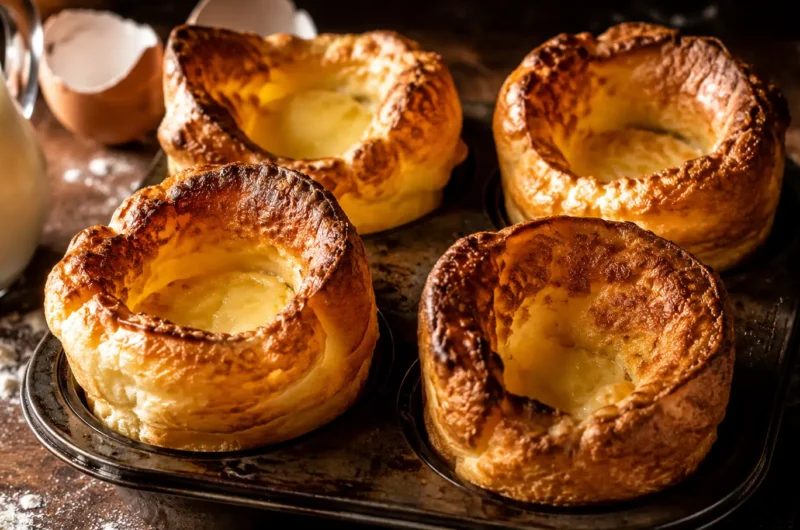
Gordon Ramsay’s Yorkshire Pudding Recipe
Course: Side Dishes4
servings30
minutes40
minutes300
kcalIngredients
140g plain flour
4 large eggs
200ml whole milk
Pinch of salt
Sunflower oil or beef dripping (for the tin, this choice matters more than people think)
Directions
- Make the Batter and Let It Rest
Combine the flour and salt in a large bowl, make a well in the center, and crack in the eggs. Whisk from the center outward, gradually incorporating the flour, then slowly add the milk while continuing to whisk until you have a completely smooth, lump-free batter. The batter should look like thin, pourable cream and light. - Heat the Tin and Fat Until Smoking
Preheat the oven to 230°C (450°F) and add a small amount of oil or beef dripping to each cup of a 12-hole muffin tin. Place the tin in the oven for at least 10-15 minutes until the fat is literally smoking. This is the most critical step in the entire recipe. - dd the Batter Quickly
Remove the tin from the oven, work fast, and pour the batter into each cup until about one-third full. Speed matters here; every second the tin sits outside the oven, the fat loses temperature. Pour confidently, don’t dither, and get it back in the oven immediately. - Bake Without Opening the Oven Door
Bake at 230°C for 20-25 minutes until the puddings are tall, deeply golden, and crispy on the edges. Here’s the rule Ramsay is strict about: do not open the oven door during baking. Not even to peek. The sudden drop in temperature collapses the puddings before they’ve set, and no amount of additional baking time will fix that.